|
1
|
ARP coordinates and site at AD
|
515725N 0042614E
013 DEG GEO 921 M from TWR. |
|
2
|
Direction and distance from (city)
|
3 NM NNW of Rotterdam.
|
|
3
|
Elevation / reference temperature
|
ELEV: -14 FT AMSL / T: 20.8 °C
|
|
4
|
Geoid undulation at AD ELEV PSN
|
143 FT
|
|
5
|
MAG VAR / annual change
|
2° E (2025) / 0.2° E
|
|
6
|
AD operator, address, telephone, telefax, email address, AFS, URL
|
ROTTERDAM THE HAGUE AIRPORT
P.O. BOX 12025 3004 GA ROTTERDAM THE NETHERLANDS TEL: +31 (0)10 446 3444 (GEN) TEL: +31 (0)10 446 3450 (OPS) TEL: +31 (0)10 446 3453 (OPS) TEL: +31 (0)10 446 3456 (DUTY MANAGER OPERATIONS) email: [email protected] (GEN) email: [email protected] (OPS) URL: https://www.rotterdamthehagueairport.nl |
|
7
|
Types of traffic permitted (IFR/VFR)
|
IFR/VFR
|
|
8
|
Remarks
|
- Upon request, contact airport authority (OPS) on channel 121.950. |
|
1
|
Cargo-handling facilities
|
AVBL
|
|
2
|
Fuel / oil types
|
Fuel: JET A-1, AVGAS 100LL, Liquid hydrogen
Oil: All kinds. |
|
3
|
Fuelling facilities/capacity
|
AVGAS 100LL: self service, Air BP Sterling card only/ capacity 120 litres/MIN.
JET A-1: unlimited. |
|
4
|
De-icing facilities
|
AVBL
|
|
5
|
Hangar space for visiting aircraft
|
Limited, O/R.
|
|
6
|
Repair facilities for visiting aircraft
|
Major repair to light aircraft and O/R to other aircraft.
|
|
7
|
Remarks
|
Cargo-handling facilities
- For addresses and other details see EHRD AD 2.23. Fuel / oil types - Liquid hydrogen for demonstration purposes only (requirements via [email protected]) |
|
1
|
Use of aircraft stand ID signs, TWY guide lines and visual docking/parking guidance system at aircraft stands
|
Aircraft stand ID signs
- Stands A, B, C and D: stand identification markings. - Boundary lines; - Aircraft stand identification markings; - One way arrows; - Illuminated guidance sign boards. - Marshaller (except home-based general aviation); - Follow-me car AVBL. |
|
2
|
RWY and TWY markings and LGT
|
RWY markings
- RWY 06: DTHR, designation,TDZ, aiming point, CL, edge. - RWY 24: DTHR, designation,TDZ, aiming point, CL, edge. - RWY 06: THR, CL, edge, RWY end. - RWY 24: THR, CL, edge, RWY end. - CL. - holding points. - Retroreflective CL markers (except TWY V4). - Edge (except TWY V4). - RWY guard LGT at holding positions (except TWY V3). |
|
3
|
Stop bars
|
No-entry bar TWY V3.
|
|
4
|
Remarks
|
RWY and TWY markings and LGT
- TWY V4 not available between SS and SR (no LGT). |
|
1
|
Associated MET office
|
DE BILT
|
|
2
|
Hours of service
MET office outside hours |
Hours of service
H24 MET office outside hours NIL |
|
3
|
Office responsible for TAF preparation
Period of validity |
De Bilt
30 HR |
|
4
|
Trend forecast
Interval of issuance |
TREND
H24 |
|
5
|
Briefing/consultation provided
|
Briefing on request from MWO-De Bilt by telephone after self-briefing.
TEL: 0900 202 3341 Briefing low level flights (IFR/VFR). TEL: 0900 202 3343 Briefing IFR flights above FL 100. TEL: 0900 202 3340 Briefing balloon flights within Amsterdam FIR. Weather bulletin (Dutch language) and METARs via Dutch public TV 'Teletekst' page 707. |
|
6
|
Flight documentation
Language(s) used |
Reports, forecasts, charts
English, Dutch |
|
7
|
Charts and other information available for briefing or consultation
|
S, P, W, T
|
|
8
|
Supplementary equipment available for providing information
|
WXR, APT
|
|
9
|
ATS units provided with information
|
Rotterdam TWR, Rotterdam APP
|
|
10
|
Additional information (limitation of service, etc.)
|
- charge for TEL briefings and consultations is € 0,50/MIN. Note: due to environmental influences the windreport for RWY 24 is not representative for the wind conditions at TDZ; 1. Windspeed from sector 290-010 DEG is underestimated up to 17 percent. 2. Windspeed from sector 130-170 DEG overestimated up to 12 percent. |
|
RWY designation
|
True BRG
|
Dimensions of RWY (M)
|
Strength (PCN) and surface of RWY and SWY
|
THR coordinates
RWY end coordinates THR GUND |
THR ELEV and highest ELEV of TDZ of precision APCH RWY
|
|---|---|---|---|---|---|
|
1
|
2
|
3
|
4
|
5
|
6
|
|
06
|
057.10°
|
2199 x 45
|
RWY: 70/F/D/W/T
Asphalt SWY: NIL |
THR:
515711.03N 0042550.45E RWY end: NIL THR GUND: 143 FT |
THR: -14 FT
TDZ: NIL |
|
24
|
237.12°
|
2199 x 45
|
RWY: 70/F/D/W/T
Asphalt SWY: NIL |
THR:
515742.69N 0042709.69E RWY end: NIL THR GUND: 143 FT |
THR: -15 FT
TDZ: NIL |
|
RWY designation
|
Remarks
|
|---|---|
|
1
|
14
|
|
06
|
Strength (PCN) and surface of RWY
- Regarding RWY strength, an unlimited use will be permitted for aircraft with an AUW <= 5700 KG. - A 180° turn is allowed for aircraft up to and including aerodrome reference code C only. |
|
24
|
Strength (PCN) and surface of RWY
- Regarding RWY strength, an unlimited use will be permitted for aircraft with an AUW <= 5700 KG. - A 180° turn is allowed for aircraft up to and including aerodrome reference code C only. |
For determination of the datum line for intersection take-off, see EHRD AD 2.23.
|
RWY designator
|
TORA
(M) |
TODA
(M) |
ASDA
(M) |
LDA
(M) |
Remarks
|
|---|---|---|---|---|---|
|
1
|
2
|
3
|
4
|
5
|
6
|
|
06
|
2199
|
2259
|
2199
|
2004
|
Take-off from RWY extremity.
DTHR 195 M. |
|
06
|
2004
|
2064
|
2004
|
NIL
|
Take-off from intersection with TWY: V2
|
|
24
|
2199
|
2259
|
2199
|
2002
|
Take-off from RWY extremity.
DTHR 197 M. |
|
24
|
2002
|
2062
|
2002
|
NIL
|
Take-off from intersection with TWY: V5
|
|
24
|
1500
|
1560
|
1500
|
NIL
|
Take-off from intersection with TWY: V4
|
|
RWY
designator |
RWY edge LGT
length spacing colour INTST |
RWY end LGT
colour WBAR |
SWY LGT
length colour |
Remarks
|
|---|---|---|---|---|
|
1
|
7
|
8
|
9
|
10
|
|
06
|
2200 M
30 M W LIH |
R
NIL |
NIL
|
RWY CL LGT
Colour: white from THR to 900 M from RWY-end; white/red from 900 M from RWY-end to 300 M from RWY-end; red from 300 M from RWY-end to RWY-end. RWY edge LGT Colour: white; last 600 M yellow. LED LGT LED lights used for APCH, THR, CL, edge and end lights. |
|
24
|
2200 M
30 M W LIH |
R
NIL |
NIL
|
RWY CL LGT
Colour: white from THR to 900 M from RWY-end; white/red from 900 M from RWY-end to 300 M from RWY-end; red from 300 M from RWY-end to RWY-end. RWY edge LGT Colour: white; last 600 M yellow. LED LGT LED lights used for APCH, THR, CL, edge and end lights. |
|
1
|
ABN/IBN location, characteristics and hours of operation
|
NIL
|
|
2
|
LDI location and LGT
Anemometer location and LGT |
LDI: NIL
Anemometer: 375 M FM THR, along RWY 06, at 105 M FM centre line near TDZ; 365 M FM THR, along RWY 24, at 105 M FM centre line near TDZ. |
|
3
|
TWY edge and centre line lighting
|
See EHRD AD 2.9.
|
|
4
|
Secondary power supply
Switchover time |
RWY/TWY: generator.
RWY: within 8 SEC, when RVR < 800 M within 1 SEC. TWY: within 8 SEC. |
|
5
|
Remarks
|
Lighted WDI at position 100 M in front of THR RWY 06 and THR RWY 24 (left side).
|
|
Designation and lateral limits
|
Vertical limits
|
Airspace classification
|
ATS unit
call sign language(s) |
Transition altitude
|
Hours of applicability
|
Remarks
|
|---|---|---|---|---|---|---|
|
1
|
2
|
3
|
4
|
5
|
6
|
7
|
|
ROTTERDAM CTR
(EHRD) 515052N 0041850E - 514822N 0041239E - 515323N 0040721E - 515553N 0041333E along clockwise arc (radius 8 NM, centre 515725N 0042614E) - 515052N 0041850E. |
C
|
Rotterdam Tower
English |
3000 FT AMSL
|
H24
|
NIL
|
|
Service
designation |
Call sign
|
Channel(s)
|
SATVOICE NR
|
Logon address
|
Hours of operation
|
Remarks
|
|---|---|---|---|---|---|---|
|
1
|
2
|
3
|
4
|
5
|
6
|
7
|
|
APP
|
Rotterdam Approach
|
122.990
|
NIL
|
NIL
|
0600-2200 (0500-2100)
|
PRI
Doppler VDF, bearings class B. |
|
315.825
|
NIL
|
NIL
|
0600-2200 (0500-2100)
|
NIL
|
||
|
131.155
|
NIL
|
NIL
|
0600-2200 (0500-2100)
|
O/R or at ATC discretion.
|
||
|
TWR
|
Rotterdam Tower
|
118.205
|
NIL
|
NIL
|
H24
|
PRI
Doppler VDF, bearings class B. |
|
362.875
|
NIL
|
NIL
|
H24
|
NIL
|
||
|
119.705
|
NIL
|
NIL
|
H24
|
Guard
O/R or at ATC discretion. Doppler VDF, bearings class B. |
||
|
Rotterdam Delivery
|
122.180
|
NIL
|
NIL
|
H24
|
Start-up control and clearance delivery.
|
|
|
ATIS
|
Rotterdam Information
|
128.565
|
NIL
|
NIL
|
H24
|
NIL
|
|
Type of aid
MAG VAR Supported OPS ILS CAT GBAS facility (VOR/ILS/MLS declination) |
ID
|
Frequency
CH Service provider Reference path ID |
Hours of operation
|
Position of transmitting antenna
|
DME: ELEV
transmitting antenna GBAS: ELEV ellipsoid height reference point SBAS: ellipsoid height LTP/FTP |
GBAS
reference point service volume radius |
Remarks
|
|---|---|---|---|---|---|---|---|
|
1
|
2
|
3
|
4
|
5
|
6
|
7
|
8
|
|
DVOR/DME
(02° E) (decl.: 2°E) |
RTM
|
110.400 MHz
CH 41X |
H24
|
515825.3N
0042851.5E |
0 FT
|
NIL
|
50 NM/250 FL
in sector 029°-239° MAG 100 NM/250 FL in sector 239°-029° MAG |
|
DME 06
|
ROS
|
CH 28X
|
H24
|
515719.9N
0042601.1E |
0 FT
|
NIL
|
DME reads zero at THR RWY 06.
Distance DME antenna/THR is 0.18 NM. |
|
GP 06
|
ROS
|
331.400 MHz
|
H24
|
515719.9N
0042601.1E |
NIL
|
NIL
|
NIL
|
|
LOC 06
(02° E) ILS CAT I/C/1 (decl.: 2°E) |
ROS
|
109.100 MHz
|
H24
|
515749.9N
0042727.8E |
NIL
|
NIL
|
410 M from THR RWY 24.
|
|
DME 24
|
RSV
|
CH 46X
|
H24
|
515740.3N
0042652.2E |
0 FT
|
NIL
|
DME reads zero at THR RWY 24.
Distance DME antenna/THR is 0.18 NM. |
|
GP 24
|
RSV
|
330.800 MHz
|
H24
|
515740.3N
0042652.2E |
NIL
|
NIL
|
NIL
|
|
LOC 24
(02° E) ILS CAT I/C/1 (decl.: 2°E) |
RSV
|
110.900 MHz
|
H24
|
515702.1N
0042528.1E |
NIL
|
NIL
|
503 M from THR RWY 06.
|
|
GPS
|
NIL
|
L1
1575.42 MHz |
H24
|
NIL
|
NIL
|
NIL
|
NIL
|
|
EGNOS
|
NIL
|
L1
1575.42 MHz |
H24
|
NIL
|
NIL
|
NIL
|
See EHRD AD 2.22 for FAS data block
|
All aircraft with MTOM > 45000 KG and/or equipped with >= 20 seats have to obtain a slot prior to arrival. This also applies to cargo flights with MTOM > 6000 KG. Due to noise abatement new commercial flights are only allowed to be operated by aircraft that comply with category R4 or better of the ACI aircraft noise rating index.
Requests for slots must be filed at Airport Coordination Netherlands (ACNL) in standard IATA format.
During office hours:
Requests for slots must be filed at Airport Coordination Netherlands (ACNL) in standard IATA format.
During office hours:
| Airport Coordination Netherlands (ACNL) | |
| TEL: | +31 (0)20 405 9730 |
| Email: | [email protected] |
| URL: | https://www.slotcoordination.nl |
Aircraft of aerodrome reference code letter D and E require special permission from airport authority regardless of any slot confirmation. Permission has to be requested 24 HR prior to operations via
[email protected]. Not applicable for unplanned traffic; the airport may be filed as alternate for code letter D and E aircraft.
Ground movement operations of aircraft with wingspan > 36 M and outer main gear wheel span > 9 M are subject to the following mitigating restrictions:
1. Follow-me service is mandatory during taxiing.
2. Adhere strictly to the follow-me instructions.
3. TWYs V2, V3, V4 and V5 do not meet the required minimum outer main wheel clearance distance (taxiway width) for aircraft with outer main gear wheel span > 9 M (i.e. also not for aircraft with wingspan > 36 M).
4. Simultaneous use of TWY N and TWY Y is not allowed for aircraft with wingspan > 36 M.
5. TWY V between TWY V1 and TWY V3 does not meet the required minimum separation distance for aircraft with wingspan > 36 M, strictly adhere to the follow-me instructions to stay clear of obstacles.
6. Limited parking space available for aircraft with wingspan > 36 M.
7. Aircraft with wingspan > 36 M cannot be parked using the aircraft stand lead-in lines.
Pilots are to use the minimum power necessary when manoeuvring on the aprons and taxiway system. MAX speed 15 KT on aprons and taxiways, except TWYs V, V1, V2, V3, V4, V5 and V6. Specific caution is advised during taxiing on aprons and TWY N and TWY Y. It is of particular importance to:
- use minimum breakaway thrust/power setting when taxiing out from aircraft stands A, B, C and D to avoid jet blast hazard at adjacent aircraft stands;
- use idle power and do not use breakaway thrust when turning from TWY N and TWY Y towards aircraft stands D, to avoid jet blast hazard at adjacent aprons and service roads. Notify ATC if breakaway thrust is required at this location;
- avoid excessive jet blast towards other aircraft when manoeuvring at J-apron.
TWY V4 not available between SS and SR (not lighted).
High visibility clothing is mandatory on airside for aircraft crew and personnel.
1. Follow-me service is mandatory during taxiing.
2. Adhere strictly to the follow-me instructions.
3. TWYs V2, V3, V4 and V5 do not meet the required minimum outer main wheel clearance distance (taxiway width) for aircraft with outer main gear wheel span > 9 M (i.e. also not for aircraft with wingspan > 36 M).
4. Simultaneous use of TWY N and TWY Y is not allowed for aircraft with wingspan > 36 M.
5. TWY V between TWY V1 and TWY V3 does not meet the required minimum separation distance for aircraft with wingspan > 36 M, strictly adhere to the follow-me instructions to stay clear of obstacles.
6. Limited parking space available for aircraft with wingspan > 36 M.
7. Aircraft with wingspan > 36 M cannot be parked using the aircraft stand lead-in lines.
- use minimum breakaway thrust/power setting when taxiing out from aircraft stands A, B, C and D to avoid jet blast hazard at adjacent aircraft stands;
- use idle power and do not use breakaway thrust when turning from TWY N and TWY Y towards aircraft stands D, to avoid jet blast hazard at adjacent aprons and service roads. Notify ATC if breakaway thrust is required at this location;
- avoid excessive jet blast towards other aircraft when manoeuvring at J-apron.
In order to reduce the environmental burden:
- after landing, all arriving aircraft shall switch off as many engines as possible before taxiing to the aircraft stand;
- all departing aircraft shall use as few engines as possible whilst taxiing to the runway.
Reduced engine taxiing should only be executed when allowed in accordance with company standard operating procedures (SOP) and when deemed safe by the crew.
- after landing, all arriving aircraft shall switch off as many engines as possible before taxiing to the aircraft stand;
- all departing aircraft shall use as few engines as possible whilst taxiing to the runway.
The use of auxiliary power units (APU) and ground power units (GPU) is strictly controlled by airport authority at all aircraft stands. Flight crew are urgently requested to limit use of the APU as much as possible to reduce environmental and noise burden.
The APU should be shut down as soon as practicable following actual in block time (AIBT), but not later than 5 MIN after parking brakes set, and not restarted until 5 MIN prior to estimated off block time (EOBT) in order to start the engines.
Exceptions:
- When it is necessary to use the APU to ensure safety on board, at flight crew decision. Report to airport authority (OPS) on channel 121.950 as soon as practicable.
- When the outside temperature is below 0°C or above +20°C (according to METAR) the APU should not be restarted until actual start boarding time (ASBT).
- When it is necessary to use an APU to diagnose and/or rectify aircraft faults (for technical/maintenance reasons). Prior permission required from the Airside Operations office, TEL: +31 (0)10 446 3450.
- At all aircraft stands other than the main apron the following applies:
- When no GPU is available at the aircraft stand the APU may be started from 30 MIN prior to EOBT and should be shut down not later than 20 MIN after parking brakes set;
- When a GPU is available, limit use of the APU as much as possible (within the time bracket 30 MIN prior to EOBT and 20 MIN after parking brakes set).
- When it is necessary to use the APU to ensure safety on board, at flight crew decision. Report to airport authority (OPS) on channel 121.950 as soon as practicable.
- When the outside temperature is below 0°C or above +20°C (according to METAR) the APU should not be restarted until actual start boarding time (ASBT).
- When it is necessary to use an APU to diagnose and/or rectify aircraft faults (for technical/maintenance reasons). Prior permission required from the Airside Operations office, TEL: +31 (0)10 446 3450.
- At all aircraft stands other than the main apron the following applies:
- When no GPU is available at the aircraft stand the APU may be started from 30 MIN prior to EOBT and should be shut down not later than 20 MIN after parking brakes set;
- When a GPU is available, limit use of the APU as much as possible (within the time bracket 30 MIN prior to EOBT and 20 MIN after parking brakes set).
Ground handling is mandatory for all commercial aircraft regardless of any slot confirmation.
For security reasons ground handling is mandatory for all non-homebased general aviation. Visiting Rotterdam The Hague Airport is only permitted with confirmed handling from GA ground handling companies.
Ground handling companies may need to tow aircraft due to limited parking space.
Single and twin-engine propeller aircraft with an MTOM < 4000 KG are exempted from ground handling if the only purpose of visiting is self-service fuelling AVGAS 100LL, with a maximum ground time of 30 MIN and if no airport facilities (e.g. coffee, toilet, etc.) are used. Notify
[email protected] at least 24 HR in advance. Note: Air BP Sterling card payment only.
For contact information see EHRD AD 2.23.
Rotterdam The Hague Airport is PPR for training flights with aircraft with MTOM > 2000 KG. For permission contact
[email protected] at least 24 HR in advance. Further restrictions apply:
1. The execution of training flights is prohibited daily from 2200-0600 (2100-0500).
2. Training flights prohibited for aircraft with MTOM >= 6000 KG due to environmental reasons (noise capacity).
3. For aircraft with MTOM < 6000 KG circuit flights in the course of training flights are prohibited during the following periods:
- MON-FRI: before 0700 and after 1700 (before 0600 and after 1600).
- SAT before 0800 and after 1200 (SAT before 0700 and after 1100).
- SAT for aircraft equipped with turbojet engines.
- SUN and HOL during the entire day: H24.
4. IFR training flights and IFR examination flights must obtain a slot time. Slot times can be obtained from the Flight Service Centre, which is located at Schiphol East. The Flight Service Centre can be reached by telephone H24:
TEL: +31 (0)20 406 2315
Slot times must be obtained at least one day before the flight. It is also possible to obtain a slot time longer in advance. If a flight cannot take place, the slot time must always be cancelled, even if cancellation occurs on the day of the flight. To cancel a slot time, the Flight Service Centre should be contacted.
1. The execution of training flights is prohibited daily from 2200-0600 (2100-0500).
2. Training flights prohibited for aircraft with MTOM >= 6000 KG due to environmental reasons (noise capacity).
3. For aircraft with MTOM < 6000 KG circuit flights in the course of training flights are prohibited during the following periods:
- MON-FRI: before 0700 and after 1700 (before 0600 and after 1600).
- SAT before 0800 and after 1200 (SAT before 0700 and after 1100).
- SAT for aircraft equipped with turbojet engines.
- SUN and HOL during the entire day: H24.
4. IFR training flights and IFR examination flights must obtain a slot time. Slot times can be obtained from the Flight Service Centre, which is located at Schiphol East. The Flight Service Centre can be reached by telephone H24:
TEL: +31 (0)20 406 2315
Slot times must be obtained at least one day before the flight. It is also possible to obtain a slot time longer in advance. If a flight cannot take place, the slot time must always be cancelled, even if cancellation occurs on the day of the flight. To cancel a slot time, the Flight Service Centre should be contacted.
Formation take-offs and landings are not allowed except with a pre-arranged operational agreement with ATC. Contact
[email protected] for such an agreement.
| Reference | Deviation | Related AIP section |
| 1 | 2 | 3 |
| Objects on runway strips | ||
| CS ADR-DSN.B.165 (a) | Frangible objects with limited height are present on runway shoulders. | EHRD AD 2.12 |
| Taxiway minimum separation distance (Y, N, A3) | ||
| CS ADR-DSN.D.260 (b) | The separation distance between TWY N and TWY Y and between TWY Y and aircraft stand A3 is less than the appropriate dimension for code letter D and E aircraft. | EHRD AD 2.8 |
| Taxiway minimum separation distance (D, G, L) | ||
| CS ADR-DSN.D.260 (b) | The separation distance between the centre line of taxiway D, G, L and surrounding objects does not meet the appropriate dimension. | EHRD AD 2.8 |
| Width of taxiway strips | ||
| CS ADR-DSN.D.315 (b) | The taxiway strip of TWY V between TWY V1 and TWY V3 does not meet the required width for code letter D and E aircraft. | EHRD AD 2.8 |
| Objects on taxiway strips | ||
| CS ADR-DSN.D.320 | TWY V between TWY V1 and TWY V3 does not meet the required minimum separation distance for code letter D and E aircraft. | EHRD AD 2.8 |
| Runway holding positions | ||
| CS ADR-DSN.D.335 (b)(1) | Runway holding positions V2, V4 and V5 do not meet the required distance which results in the infringement of a ILS/MLS critical/sensitive area. | EHRD AD 2.8 |
| Clearance distances on aircraft stands | ||
| CS ADR-DSN.E.365 (b) | The clearance distance between aircraft stands Q-apron is less than 3 M for code letter A aircraft. | EHRD AD 2.9 |
| Runway designation marking | ||
| CS ADR-DSN.L.525 (c)(1)(i) | The renumbering of the runway designator of RWY 06/24 has been formally postponed by the competent authority until 2030. | EHRD AD 2.12 |
| Precision approach category I lighting system | ||
| CS ADR-DSN.M.630 (b)(1) | For RWY 06 the system does not extend 900 M from the runway threshold. | EHRD AD 2.14 |
| Apron floodlighting | ||
| CS ADR-DSN.M.750 (d)(2) | The illuminance requirement will not be met for aircraft stands A1, A2 and A3. | EHRD AD 2.8 |
| Road holding position light | ||
| CS ADR-DSN.M.770 (a) | Road holding position lights are not provided. | NIL |
| Electrical systems – monitoring | ||
| CS ADR-DSN.S.890 (d) | AGL is not monitored fully automatic. | NIL |
| Emergency access and service roads | ||
| CS ADR-DSN.T.900 | No road holding position lights are provided. | NIL |
| Siting of equipment and installations on operational areas | ||
| CS ADR-DSN.T.915 (b)(1) | Equipment shelters of the glide path antennas RWY 06 and RWY 24 located on runway strip, approximately 120 M from the runway centre line. | EHRD AD 2.12 |
NIL
The instrument departure procedures are based on ICAO Annex 2 and on ICAO Documents 4444-ATM/501 (PANS-ATM), 7030 (SUPPS) and 8168-OPS/611 (PANS-OPS).
Note:
in the Rotterdam TMAs VFR flights without ATC clearance are permitted. For such flights radio communications is not compulsory.
Pilots shall request permission from ATC before starting engines and when applicable report a cross-bleed start. The request for start-up shall be made to Rotterdam Delivery after all preparations for departure have been made (doors closed etc.) and shall include:
- aircraft identification (e.g. KL101).
- position (e.g. D3).
- ATIS information (e.g. information R).
- flight rules (e.g. IFR).
- destination (e.g. London).
- request start-up.
If unable RNAV, inform ATC prior to start-up.
Permission for start-up will be issued either immediately or at a specified time. Since ATC planning of outbound traffic (involving en-route clearance and co-ordination with adjacent ACCs) is based on the start-up time, the pilot shall be able to comply with start-up and taxi permission. Any delay in start-up or taxiing shall be reported to ATC immediately. In case of indefinite delay the probable duration of delay will be given.
Apart from the ATIS broadcast no MET information will be provided to departing aircraft except RVR (see EHRD AD 2.18).
Note:
for commercial flights ground start-up crew is mandatory for engine start.
Note: performing a cross-bleed start at aircraft stand or apron is not permitted. Towing or taxi-out on one engine to an assigned location for cross-bleed start is necessary.
- position (e.g. D3).
- ATIS information (e.g. information R).
- flight rules (e.g. IFR).
- destination (e.g. London).
- request start-up.
Permission for start-up will be issued either immediately or at a specified time. Since ATC planning of outbound traffic (involving en-route clearance and co-ordination with adjacent ACCs) is based on the start-up time, the pilot shall be able to comply with start-up and taxi permission. Any delay in start-up or taxiing shall be reported to ATC immediately. In case of indefinite delay the probable duration of delay will be given.
Apart from the ATIS broadcast no MET information will be provided to departing aircraft except RVR (see EHRD AD 2.18).
Note: performing a cross-bleed start at aircraft stand or apron is not permitted. Towing or taxi-out on one engine to an assigned location for cross-bleed start is necessary.
The en-route clearance will be issued after start-up clearance has been given by Rotterdam Delivery. An en-route clearance contains:
a. Clearance limit: airport of destination.
b. Standard instrument departure (SID).
c. SSR code.
d. Departure instructions if applicable.
e. CTOT if applicable.
Example of an en-route clearance: "KLM345 cleared to London, SOMEL 2A Departure, squawk 2123, slot 25".
b. Standard instrument departure (SID).
c. SSR code.
d. Departure instructions if applicable.
e. CTOT if applicable.
The instrument departure procedures are laid down in standard instrument departures (SIDs). SIDs are designated in accordance with ICAO Annex 11. SID designation is composed of the following elements:
- a basic indicator, i.e. a significant point.
- a validity indicator, i.e. a number from 1 to 9 indicating the valid version of a specific SID.
- a route indicator, i.e. a letter representing the runway where the SID begins.
SIDs are published for RWY 06 and 24.
Note:
if not able to comply with the crossing conditions prescribed in the SIDs, inform Rotterdam Delivery.
- a validity indicator, i.e. a number from 1 to 9 indicating the valid version of a specific SID.
- a route indicator, i.e. a letter representing the runway where the SID begins.
Instructions containing deviations from the standard instrument departure may be added to the en-route or take-off clearance. These instructions may comprise an opposite turn after take-off, maintaining a specified heading or temporary altitude restrictions; this additional instructions amend the relevant part of the SID only.
Climb as rapidly as practicable to at least 2000 FT AMSL.
Aircraft shall request taxi clearance from Rotterdam Tower.
Aircraft proceeding via the Schiphol TMAs will normally be transferred to Schiphol APP during crossing.
- If possible call Amsterdam ACC Supervisor on telephone number +31 (0)20 406 3999.
Note: use telephone connection to mitigate COM failure only. All telephone calls will be automatically recorded.
- If telephone connection is disconnected prematurely (before read-back), revert to general communication failure procedure (see ENR 1.3).
Additionally, for departing flights, the following communication failure procedure applies:
- If a clearance to climb or re-routing instructions have not been given, comply with the route and altitude limitations detailed in the allocated standard instrument departure procedure or the departure instructions provided at take-off until the last waypoint has been reached.
Note: use telephone connection to mitigate COM failure only. All telephone calls will be automatically recorded.
- If telephone connection is disconnected prematurely (before read-back), revert to general communication failure procedure (see ENR 1.3).
- If a clearance to climb or re-routing instructions have not been given, comply with the route and altitude limitations detailed in the allocated standard instrument departure procedure or the departure instructions provided at take-off until the last waypoint has been reached.
- Transition altitude: 3000 FT AMSL.
- SIDs have to be considered as minimum noise routings which shall be strictly adhered to.
- Turn radii based on a 25° bank angle.
- MAX 250 KIAS below FL 100 unless otherwise instructed.
- For continuous routings and crossing conditions on ATS routes as applicable see paragraph 1.4.3.
- SIDs have to be considered as minimum noise routings which shall be strictly adhered to.
- Turn radii based on a 25° bank angle.
- MAX 250 KIAS below FL 100 unless otherwise instructed.
- For continuous routings and crossing conditions on ATS routes as applicable see paragraph 1.4.3.
Especially propeller-driven aircraft can expect additional departure instructions. These instructions may be added to the en-route or take-off clearance and may comprise a specific heading or temporary altitude restriction. Such additives amend the relevant part of the SID only.
For some SIDs, differences in the way the coding for these SIDs is processed by the various FMS systems may result in considerable track dispersion during turns. This track dispersion can be reduced by the application of radius to fix turns, which results in concentration of the flight paths. Thus, in order to enhance noise abatement, for the RWY 06 SOMEL and TULIP SIDs an alternative coding comprising a radius to fix turn is introduced.
To distinguish between the standard coding and the coding comprising the RF turn the letter "Y" has been added after the SID identification. Consequently, two coding tables are listed for the SOMEL 2A and TULIP 4A SIDs:
1. [SOME2A] or [TULI4A] is the standard designator where only fly-over and fly-by turns are applied;
2. [SOM2AY] or [TUL4AY] is the designator with the addition "Y" where the RF turn coding is applied.
In the ATC clearance, only the standard (unchanged) designator will be used without changes in the ATC clearance phraseology. This clearance allows for selection of either coding version as the resulting flight paths are considered identical by ATC.
Note that for RWY 24 also alternative SIDs with a "Y" addition to the designator are available, though exclusively for WTC L and M aircraft. In analogy to the relevant SIDs RWY 06, these SIDs RWY 24 are alternative coding variants to enhance noise abatement. However, for RWY 24 the SID coding does not comprise the RF path terminator.
For the use of the RF coding version the following requirements are applicable:
- The aircraft must be equipped with an FMS comprising a pre-loaded navigation database and a navigation display.
- The aircraft FMS must be capable of processing the RF path terminator.
- The aircraft FMS must use GNSS as the primary navigation sensor.
- The operator must be approved for RNP 1 operations by their state of registry.
To distinguish between the standard coding and the coding comprising the RF turn the letter "Y" has been added after the SID identification. Consequently, two coding tables are listed for the SOMEL 2A and TULIP 4A SIDs:
2. [SOM2AY] or [TUL4AY] is the designator with the addition "Y" where the RF turn coding is applied.
Note that for RWY 24 also alternative SIDs with a "Y" addition to the designator are available, though exclusively for WTC L and M aircraft. In analogy to the relevant SIDs RWY 06, these SIDs RWY 24 are alternative coding variants to enhance noise abatement. However, for RWY 24 the SID coding does not comprise the RF path terminator.
For the use of the RF coding version the following requirements are applicable:
- The aircraft FMS must be capable of processing the RF path terminator.
- The aircraft FMS must use GNSS as the primary navigation sensor.
- The operator must be approved for RNP 1 operations by their state of registry.
1. RWY 06 SOMEL or TULIP SID: in addition to the standard coding [SOME2A] or [TULI4A], an alternative coding [SOM2AY] and [TUL4AY] comprising radius to fix (RF) turns is available. See paragraph 1.4.1.4 for requirements to use the RF coding version. Due to noise abatement aircraft with the appropriate equipment and approval are encouraged to fly the RF procedure.
2. RWY 24: for relevant SIDs, e.g. COA 2B SID, in addition to the standard coding [COA2B] an alternative coding [COA2BY] is available for exclusive use by WTC L and M aircraft. As resulting flight paths of standard and alternative coding are considered identical by ATC, only the standard (unchanged) designator will be used in the ATC clearance (see also paragraph 1.4.1.4). Due to noise abatement considerations, pilots of WTC L and M aircraft are encouraged to select the alternative coding version.
3. RNAV 1 required.
4. Close-in obstacles up to 110 FT shortly after RWY end (see EHRD AD 2.10).
2. RWY 24: for relevant SIDs, e.g. COA 2B SID, in addition to the standard coding [COA2B] an alternative coding [COA2BY] is available for exclusive use by WTC L and M aircraft. As resulting flight paths of standard and alternative coding are considered identical by ATC, only the standard (unchanged) designator will be used in the ATC clearance (see also paragraph 1.4.1.4). Due to noise abatement considerations, pilots of WTC L and M aircraft are encouraged to select the alternative coding version.
3. RNAV 1 required.
4. Close-in obstacles up to 110 FT shortly after RWY end (see EHRD AD 2.10).
Note:
aircraft may only continue to climb above 3000 FT AMSL after an ATC clearance has been received.
Note
: REF EHRD AD 2.22 paragraph 1.2.2 "En-route clearance": if not able to comply with the crossing conditions prescribed in the SIDs, inform Rotterdam Delivery before take-off.
| ARNEM Departures | |
| L620 | If the requested flight level is above FL 245, cross OLDOD at or above FL 250. |
| INKET Departures | |
| Q21 | IFR flights to EHLE with requested flight level below FL 055 shall file ATS route Q21 when available at 2000 FT AMSL. |
| LUNIX Departures | |
| Z739 | If the requested flight level is above FL 245, cross AMOSU at or above FL 250. |
See charts SID RWY 06 east and SID RWY 06 west.
|
ANDIK 2A
[ANDI2A] |
See paragraph 1.4.2 specific remark: 3, 4.
After departure climb to 3000 FT AMSL. |
||||||||||
| Serial number |
Path
descriptor |
WPT ident | Fly-over |
Course/Track
°MAG / (°T) |
Recom.
navaid |
Dist. (NM) | Turn | Altitude (FT / FL) |
Speed
(KIAS) |
VPA (°) / TCH (FT) |
NAV
specification |
| 001 | CA | - | - | 055 / (057.3) | RTM | - | R | + 500 | - | - | RNAV 1 |
| 002 | CF | RD153 | N | 062 / (064.3) | RTM | - | - | - | - | - | RNAV 1 |
| 003 | TF | RD151 | N | 022 / (024.1) | - | 3.1 | - | - | - | - | RNAV 1 |
| 004 | TF | RD150 | N | 044 / (046.0) | - | 9.2 | - | - | - | - | RNAV 1 |
| 005 | TF | PAM | N | 044 / (046.2) | - | 15.6 | - | - | - | - | RNAV 1 |
| 006 | TF | ANDIK | N | 012 / (015.0) | - | 25.2 | - | - | - | - | RNAV 1 |
|
ARNEM 3A
[ARNE3A] |
See paragraph 1.4.2 specific remark: 3, 4.
After departure climb to 3000 FT AMSL. |
||||||||||
| Serial number |
Path
descriptor |
WPT ident | Fly-over |
Course/Track
°MAG / (°T) |
Recom.
navaid |
Dist. (NM) | Turn | Altitude (FT / FL) |
Speed
(KIAS) |
VPA (°) / TCH (FT) |
NAV
specification |
| 001 | CA | - | - | 055 / (057.3) | RTM | - | R | + 500 | - | - | RNAV 1 |
| 002 | CF | RD153 | N | 062 / (064.3) | RTM | - | - | - | - | - | RNAV 1 |
| 003 | TF | RD151 | N | 022 / (024.2) | - | 3.1 | - | - | - | - | RNAV 1 |
| 004 | TF | RD150 | N | 044 / (046.0) | - | 9.2 | - | - | - | - | RNAV 1 |
| 005 | TF | IVLUT | N | 070 / (072.8) | - | 18.1 | - | - | - | - | RNAV 1 |
| 006 | TF | NYKER | N | 092 / (094.6) | - | 10.1 | - | - | - | - | RNAV 1 |
| 007 | TF | ARNEM | N | 109 / (111.5) | - | 21.8 | - | - | - | - | RNAV 1 |
|
COA 2A
[COA2A] |
See paragraph 1.4.2 specific remark: 3, 4.
After departure climb to 3000 FT AMSL. |
||||||||||
| Serial number |
Path
descriptor |
WPT ident | Fly-over |
Course/Track
°MAG / (°T) |
Recom.
navaid |
Dist. (NM) | Turn | Altitude (FT / FL) |
Speed
(KIAS) |
VPA (°) / TCH (FT) |
NAV
specification |
| 001 | CA | - | - | 055 / (057.3) | RTM | - | R | + 500 | - | - | RNAV 1 |
| 002 | CF | RD157 | N | 062 / (064.3) | RTM | - | - | - | - | - | RNAV 1 |
| 003 | TF | RD161 | N | 151 / (153.2) | - | 6.0 | - | - | - | - | RNAV 1 |
| 004 | TF | RD154 | N | 233 / (235.6) | - | 5.7 | - | - | - | - | RNAV 1 |
| 005 | TF | COA | N | 233 / (235.5) | - | 54.8 | - | - FL 050 | - | - | RNAV 1 |
|
INKET 2A
[INKE2A] |
See paragraph 1.4.2 specific remark: 3, 4.
After departure climb to 3000 FT AMSL. |
||||||||||
| Serial number |
Path
descriptor |
WPT ident | Fly-over |
Course/Track
°MAG / (°T) |
Recom.
navaid |
Dist. (NM) | Turn | Altitude (FT / FL) |
Speed
(KIAS) |
VPA (°) / TCH (FT) |
NAV
specification |
| 001 | CA | - | - | 055 / (057.3) | RTM | - | R | + 500 | - | - | RNAV 1 |
| 002 | CF | RD157 | N | 062 / (064.3) | RTM | - | - | - | - | - | RNAV 1 |
| 003 | TF | INKET | N | 151 / (153.2) | - | 13.4 | - | - | - | - | RNAV 1 |
|
LUNIX 2A
[LUNI2A] |
See paragraph 1.4.2 specific remark: 3, 4.
After departure climb to 3000 FT AMSL. |
||||||||||
| Serial number |
Path
descriptor |
WPT ident | Fly-over |
Course/Track
°MAG / (°T) |
Recom.
navaid |
Dist. (NM) | Turn | Altitude (FT / FL) |
Speed
(KIAS) |
VPA (°) / TCH (FT) |
NAV
specification |
| 001 | CA | - | - | 055 / (057.3) | RTM | - | R | + 500 | - | - | RNAV 1 |
| 002 | CF | RD153 | N | 062 / (064.3) | RTM | - | - | - | - | - | RNAV 1 |
| 003 | TF | RD151 | N | 022 / (024.2) | - | 3.1 | - | - | - | - | RNAV 1 |
| 004 | TF | RD150 | N | 044 / (046.0) | - | 9.2 | - | - | - | - | RNAV 1 |
| 005 | TF | IVLUT | N | 070 / (072.8) | - | 18.2 | - | - | - | - | RNAV 1 |
| 006 | TF | LUNIX | N | 123 / (125.2) | - | 14.0 | - | - | - | - | RNAV 1 |
|
NEPTU 2A
[NEPT2A] |
See paragraph 1.4.2 specific remark: 3, 4.
After departure climb to 3000 FT AMSL. |
||||||||||
| Serial number |
Path
descriptor |
WPT ident | Fly-over |
Course/Track
°MAG / (°T) |
Recom.
navaid |
Dist. (NM) | Turn | Altitude (FT / FL) |
Speed
(KIAS) |
VPA (°) / TCH (FT) |
NAV
specification |
| 001 | CA | - | - | 055 / (057.3) | RTM | - | R | + 500 | - | - | RNAV 1 |
| 002 | CF | RD157 | N | 062 / (064.3) | RTM | - | - | - | - | - | RNAV 1 |
| 003 | TF | INKET | N | 151 / (153.2) | - | 13.4 | - | - | - | - | RNAV 1 |
| 004 | TF | PELUB | N | 079 / (081.5) | - | 13.7 | - | - | - | - | RNAV 1 |
| 005 | TF | NEPTU | N | 067 / (069.2) | - | 9.6 | - | - | - | - | RNAV 1 |
|
SOMEL 2A
[SOME2A] |
See paragraph 1.4.2 specific remark: 3, 4.
Minimum climb gradient 8.0% to 500 FT AMSL. After departure climb to 3000 FT AMSL. |
||||||||||
| Serial number |
Path
descriptor |
WPT ident | Fly-over |
Course/Track
°MAG / (°T) |
Recom.
navaid |
Dist. (NM) | Turn | Altitude (FT / FL) |
Speed
(KIAS) |
VPA (°) / TCH (FT) |
NAV
specification |
| 001 | CA | - | - | 055 / (057.3) | RTM | - | R | + 500 | - | - | RNAV 1 |
| 002 | DF | RD181 | Y | - | - | - | - | - | - | - | RNAV 1 |
| 003 | CF | RD186 | N | 214 / (216.3) | RTM | - | L | - | - 220 | - | RNAV 1 |
| 004 | TF | SOMEL | N | 260 / (262.3) | - | 10.2 | - | - | - | - | RNAV 1 |
| 005 | TF | ABNED | N | 259 / (261.2) | - | 34.5 | - | - | - | - | RNAV 1 |
|
SOMEL 2A
[SOM2AY] |
RNP 1 required.
See paragraph 1.4.2 specific remark: 1, 4. Minimum climb gradient 7.5% to 400 FT AMSL. After departure climb to 3000 FT AMSL. |
||||||||||
| Serial number |
Path
descriptor |
WPT ident | Fly-over |
Course/Track
°MAG / (°T) |
Recom.
navaid |
Dist. (NM) | Turn | Altitude (FT / FL) |
Speed
(KIAS) |
VPA (°) / TCH (FT) |
NAV
specification |
| 001 | CF | RD182 | N | 055 / (057.4) | RTM | - | - | - | - | - | RNP 1 |
| 002 | RF (centre RD187, radius 4.780 NM) | RD183 | N | - | - | 1.0 | R | - | - | - | RNP 1 |
| 003 | RF (centre RD188, radius 1.600 NM) | RD184 | N | - | - | 1.0 | L | - | - 210 | - | RNP 1 |
| 004 | RF (centre RD189, radius 1.880 NM) | RD185 | N | - | - | 5.7 | L | - | - 210 | - | RNP 1 |
| 005 | TF | RD186 | N | 216 / (218.1) | - | 4.8 | - | - | - | - | RNP 1 |
| 006 | TF | SOMEL | N | 260 / (262.3) | - | 10.2 | - | - | - | - | RNP 1 |
| 007 | TF | ABNED | N | 259 / (261.2) | - | 34.5 | - | - | - | - | RNP 1 |
|
Waypoints:
RD182 RD183 RD184 RD185 |
Coordinates:
515819.8N 0042842.6E 515846.8N 0043009.0E 515923.7N 0043123.5E 520135.1N 0042627.3E |
||||||||||
|
RF arc centres:
RD187 RD188 RD189 |
Coordinates:
515419.1N 0043253.9E 520016.4N 0042913.7E 520025.6N 0042851.0E |
||||||||||
|
TULIP 4A
[TULI4A] |
See paragraph 1.4.2 specific remark: 3, 4.
Minimum climb gradient 8.0% to 500 FT AMSL. After departure climb to 3000 FT AMSL. |
||||||||||
| Serial number |
Path
descriptor |
WPT ident | Fly-over |
Course/Track
°MAG / (°T) |
Recom.
navaid |
Dist. (NM) | Turn | Altitude (FT / FL) |
Speed
(KIAS) |
VPA (°) / TCH (FT) |
NAV
specification |
| 001 | CA | - | - | 055 / (057.3) | RTM | - | R | + 500 | - | - | RNAV 1 |
| 002 | DF | RD181 | Y | - | - | - | - | - | - | - | RNAV 1 |
| 003 | CF | RD186 | N | 214 / (216.3) | RTM | - | L | - | - 220 | - | RNAV 1 |
| 004 | TF | SOMEL | N | 260 / (262.3) | - | 10.2 | - | - | - | - | RNAV 1 |
| 005 | TF | OBAGU | N | 313 / (315.5) | - | 17.9 | - | - | - | - | RNAV 1 |
| 006 | TF | TULIP | N | 015 / (017.1) | - | 13.5 | - | - | - | - | RNAV 1 |
|
TULIP 4A
[TUL4AY] |
RNP 1 required.
See paragraph 1.4.2 specific remark: 1, 4. Minimum climb gradient 7.5% to 400 FT AMSL. After departure climb to 3000 FT AMSL. |
||||||||||
| Serial number |
Path
descriptor |
WPT ident | Fly-over |
Course/Track
°MAG / (°T) |
Recom.
navaid |
Dist. (NM) | Turn | Altitude (FT / FL) |
Speed
(KIAS) |
VPA (°) / TCH (FT) |
NAV
specification |
| 001 | CF | RD182 | N | 055 / (057.3) | RTM | - | - | - | - | - | RNP 1 |
| 002 | RF (centre RD187, radius 4.780 NM) | RD183 | N | - | - | 1.0 | R | - | - | - | RNP 1 |
| 003 | RF (centre RD188, radius 1.600 NM) | RD184 | N | - | - | 1.0 | L | - | - 210 | - | RNP 1 |
| 004 | RF (centre RD189, radius 1.880 NM) | RD185 | N | - | - | 5.7 | L | - | - 210 | - | RNP 1 |
| 005 | TF | RD186 | N | 216 / (218.1) | - | 4.8 | - | - | - | - | RNP 1 |
| 006 | TF | SOMEL | N | 260 / (262.3) | - | 10.2 | - | - | - | - | RNP 1 |
| 007 | TF | OBAGU | N | 313 / (315.5) | - | 17.9 | - | - | - | - | RNP 1 |
| 008 | TF | TULIP | N | 015 / (017.1) | - | 13.5 | - | - | - | - | RNP 1 |
|
Waypoints:
RD182 RD183 RD184 RD185 |
Coordinates:
515819.8N 0042842.6E 515846.8N 0043009.0E 515923.7N 0043123.5E 520135.1N 0042627.3E |
||||||||||
|
RF arc centres:
RD187 RD188 RD189 |
Coordinates:
515419.1N 0043253.9E 520016.4N 0042913.7E 520025.6N 0042851.0E |
||||||||||
|
WOODY 2A
[WOOD2A] |
See paragraph 1.4.2 specific remark: 3, 4.
After departure climb to 3000 FT AMSL. |
||||||||||
| Serial number |
Path
descriptor |
WPT ident | Fly-over |
Course/Track
°MAG / (°T) |
Recom.
navaid |
Dist. (NM) | Turn | Altitude (FT / FL) |
Speed
(KIAS) |
VPA (°) / TCH (FT) |
NAV
specification |
| 001 | CA | - | - | 055 / (057.3) | RTM | - | R | + 500 | - | - | RNAV 1 |
| 002 | CF | RD157 | N | 062 / (064.3) | RTM | - | - | - | - | - | RNAV 1 |
| 003 | TF | RD161 | N | 151 / (153.2) | - | 6.0 | - | - | - | - | RNAV 1 |
| 004 | TF | RD154 | N | 233 / (235.6) | - | 5.7 | - | - | - | - | RNAV 1 |
| 005 | TF | WOODY | N | 192 / (194.4) | - | 28.9 | - | - | - | - | RNAV 1 |
See charts SID RWY 24 east and SID RWY 24 west.
|
ANDIK 2B
[ANDI2B] |
See paragraph 1.4.2 specific remark: 3, 4.
Minimum climb gradient 4.5% to 500 FT AMSL. After departure climb to 3000 FT AMSL. |
||||||||||
| Serial number |
Path
descriptor |
WPT ident | Fly-over |
Course/Track
°MAG / (°T) |
Recom.
navaid |
Dist. (NM) | Turn | Altitude (FT / FL) |
Speed
(KIAS) |
VPA (°) / TCH (FT) |
NAV
specification |
| 001 | CF | RD159 | Y | 235 / (237.3) | RTM | - | - | - | - | - | RNAV 1 |
| 002 | CA | - | - | 235 / (237.3) | RTM | - | R | + 500 | - | - | RNAV 1 |
| 003 | DF | RD207 | N | - | - | - | - | - | - 230 | - | RNAV 1 |
| 004 | TF | RD163 | N | 076 / (078.3) | - | 4.9 | - | - | - | - | RNAV 1 |
| 005 | TF | RD150 | N | 044 / (046.0) | - | 12.0 | - | - | - | - | RNAV 1 |
| 006 | TF | PAM | N | 044 / (046.2) | - | 15.6 | - | - | - | - | RNAV 1 |
| 007 | TF | ANDIK | N | 012 / (015.0) | - | 25.2 | - | - | - | - | RNAV 1 |
|
ARNEM 3B
[ARNE3B] |
See paragraph 1.4.2 specific remark: 3, 4.
Minimum climb gradient 4.5% to 500 FT AMSL. After departure climb to 3000 FT AMSL. |
||||||||||
| Serial number |
Path
descriptor |
WPT ident | Fly-over |
Course/Track
°MAG / (°T) |
Recom.
navaid |
Dist. (NM) | Turn | Altitude (FT / FL) |
Speed
(KIAS) |
VPA (°) / TCH (FT) |
NAV
specification |
| 001 | CF | RD159 | Y | 235 / (237.3) | RTM | - | - | - | - | - | RNAV 1 |
| 002 | CA | - | - | 235 / (237.3) | RTM | - | R | + 500 | - | - | RNAV 1 |
| 003 | DF | RD207 | N | - | - | - | - | - | - 230 | - | RNAV 1 |
| 004 | TF | RD163 | N | 076 / (078.3) | - | 4.9 | - | - | - | - | RNAV 1 |
| 005 | TF | RD150 | N | 044 / (046.0) | - | 12.0 | - | - | - | - | RNAV 1 |
| 006 | TF | IVLUT | N | 070 / (072.8) | - | 18.2 | - | - | - | - | RNAV 1 |
| 007 | TF | NYKER | N | 092 / (094.6) | - | 10.1 | - | - | - | - | RNAV 1 |
| 008 | TF | ARNEM | N | 109 / (111.5) | - | 21.8 | - | - | - | - | RNAV 1 |
|
COA 2B
[COA2B] |
See paragraph 1.4.2 specific remark: 2, 3, 4.
Minimum climb gradient 6.3% to 400 FT AMSL. After departure climb to 3000 FT AMSL. |
||||||||||
| Serial number |
Path
descriptor |
WPT ident | Fly-over |
Course/Track
°MAG / (°T) |
Recom.
navaid |
Dist. (NM) | Turn | Altitude (FT / FL) |
Speed
(KIAS) |
VPA (°) / TCH (FT) |
NAV
specification |
| 001 | CF | RD166 | Y | 235 / (237.3) | RTM | - | - | - | - | - | RNAV 1 |
| 002 | CA | - | - | 235 / (237.3) | RTM | - | R | + 400 | - | - | RNAV 1 |
| 003 | DF | RD158 | N | - | - | - | - | - | - 220 | - | RNAV 1 |
| 004 | TF | RD156 | N | 260 / (262.3) | - | 5.5 | - | - | - | - | RNAV 1 |
| 005 | TF | COA | N | 219 / (221.1) | - | 47.7 | - | - FL 050 | - | - | RNAV 1 |
|
COA 2B
[COA2BY] |
See paragraph 1.4.2 specific remark: 2, 3, 4.
Minimum climb gradient 6.3% to 400 FT AMSL. After departure climb to 3000 FT AMSL. |
||||||||||
| Serial number |
Path
descriptor |
WPT ident | Fly-over |
Course/Track
°MAG / (°T) |
Recom.
navaid |
Dist. (NM) | Turn | Altitude (FT / FL) |
Speed
(KIAS) |
VPA (°) / TCH (FT) |
NAV
specification |
| 001 | CF | RD159 | Y | 235 / (237.3) | RTM | - | - | - | - | - | RNAV 1 |
| 002 | DF | RD158 | N | - | - | - | - | - | - 220 | - | RNAV 1 |
| 003 | TF | RD156 | N | 260 / (262.3) | - | 5.5 | - | - | - | - | RNAV 1 |
| 004 | TF | COA | N | 219 / (221.1) | - | 47.7 | - | - FL 050 | - | - | RNAV 1 |
|
INKET 2B
[INKE2B] |
See paragraph 1.4.2 specific remark: 2, 3, 4.
Minimum climb gradient 6.3% to 400 FT AMSL. After departure climb to 3000 FT AMSL. |
||||||||||
| Serial number |
Path
descriptor |
WPT ident | Fly-over |
Course/Track
°MAG / (°T) |
Recom.
navaid |
Dist. (NM) | Turn | Altitude (FT / FL) |
Speed
(KIAS) |
VPA (°) / TCH (FT) |
NAV
specification |
| 001 | CF | RD166 | Y | 235 / (237.3) | RTM | - | - | - | - | - | RNAV 1 |
| 002 | CA | - | - | 235 / (237.3) | RTM | - | R | + 400 | - | - | RNAV 1 |
| 003 | DF | RD158 | N | - | - | - | - | - | - 220 | - | RNAV 1 |
| 004 | TF | RD164 | N | 260 / (262.3) | - | 7.1 | - | - | - | - | RNAV 1 |
| 005 | TF | RD165 | N | 151 / (153.1) | - | 12.0 | - | - | - | - | RNAV 1 |
| 006 | TF | INKET | N | 078 / (080.8) | - | 18.2 | - | - | - | - | RNAV 1 |
|
INKET 2B
[INK2BY] |
See paragraph 1.4.2 specific remark: 2, 3, 4.
Minimum climb gradient 6.3% to 400 FT AMSL. After departure climb to 3000 FT AMSL. |
||||||||||
| Serial number |
Path
descriptor |
WPT ident | Fly-over |
Course/Track
°MAG / (°T) |
Recom.
navaid |
Dist. (NM) | Turn | Altitude (FT / FL) |
Speed
(KIAS) |
VPA (°) / TCH (FT) |
NAV
specification |
| 001 | CF | RD159 | Y | 235 / (237.3) | RTM | - | - | - | - | - | RNAV 1 |
| 002 | DF | RD158 | N | - | - | - | - | - | - 220 | - | RNAV 1 |
| 003 | TF | RD164 | N | 260 / (262.3) | - | 7.1 | - | - | - | - | RNAV 1 |
| 004 | TF | RD165 | N | 151 / (153.1) | - | 12.0 | - | - | - | - | RNAV 1 |
| 005 | TF | INKET | N | 078 / (080.8) | - | 18.2 | - | - | - | - | RNAV 1 |
|
LUNIX 2B
[LUNI2B] |
See paragraph 1.4.2 specific remark: 3, 4.
Minimum climb gradient 4.5% to 500 FT AMSL. After departure climb to 3000 FT AMSL. |
||||||||||
| Serial number |
Path
descriptor |
WPT ident | Fly-over |
Course/Track
°MAG / (°T) |
Recom.
navaid |
Dist. (NM) | Turn | Altitude (FT / FL) |
Speed
(KIAS) |
VPA (°) / TCH (FT) |
NAV
specification |
| 001 | CF | RD159 | Y | 235 / (237.3) | RTM | - | - | - | - | - | RNAV 1 |
| 002 | CA | - | - | 235 / (237.3) | RTM | - | R | + 500 | - | - | RNAV 1 |
| 003 | DF | RD207 | N | - | - | - | - | - | - 230 | - | RNAV 1 |
| 004 | TF | RD163 | N | 076 / (078.3) | - | 4.9 | - | - | - | - | RNAV 1 |
| 005 | TF | RD150 | N | 044 / (046.0) | - | 12.0 | - | - | - | - | RNAV 1 |
| 006 | TF | IVLUT | N | 070 / (072.8) | - | 18.2 | - | - | - | - | RNAV 1 |
| 007 | TF | LUNIX | N | 123 / (125.2) | - | 14.0 | - | - | - | - | RNAV 1 |
|
NEPTU 2B
[NEPT2B] |
See paragraph 1.4.2 specific remark: 2, 3, 4.
Minimum climb gradient 6.3% to 400 FT AMSL. After departure climb to 3000 FT AMSL. |
||||||||||
| Serial number |
Path
descriptor |
WPT ident | Fly-over |
Course/Track
°MAG / (°T) |
Recom.
navaid |
Dist. (NM) | Turn | Altitude (FT / FL) |
Speed
(KIAS) |
VPA (°) / TCH (FT) |
NAV
specification |
| 001 | CF | RD166 | Y | 235 / (237.1) | RTM | - | - | - | - | - | RNAV 1 |
| 002 | CA | - | - | 235 / (237.1) | RTM | - | R | + 400 | - | - | RNAV 1 |
| 003 | DF | RD158 | N | - | - | - | - | - | - 220 | - | RNAV 1 |
| 004 | TF | RD164 | N | 260 / (262.3) | - | 7.1 | - | - | - | - | RNAV 1 |
| 005 | TF | RD165 | N | 151 / (153.1) | - | 12.0 | - | - | - | - | RNAV 1 |
| 006 | TF | INKET | N | 078 / (080.8) | - | 18.2 | - | - | - | - | RNAV 1 |
| 007 | TF | PELUB | N | 079 / (081.5) | - | 13.7 | - | - | - | - | RNAV 1 |
| 008 | TF | NEPTU | N | 067 / (069.2) | - | 9.6 | - | - | - | - | RNAV 1 |
|
NEPTU 2B
[NEP2BY] |
See paragraph 1.4.2 specific remark: 2, 3, 4.
Minimum climb gradient 6.3% to 400 FT AMSL. After departure climb to 3000 FT AMSL. |
||||||||||
| Serial number |
Path
descriptor |
WPT ident | Fly-over |
Course/Track
°MAG / (°T) |
Recom.
navaid |
Dist. (NM) | Turn | Altitude (FT / FL) |
Speed
(KIAS) |
VPA (°) / TCH (FT) |
NAV
specification |
| 001 | CF | RD159 | Y | 235 / (237.3) | RTM | - | - | - | - | - | RNAV 1 |
| 002 | DF | RD158 | N | - | - | - | - | - | - 220 | - | RNAV 1 |
| 003 | TF | RD164 | N | 260 / (262.3) | - | 7.1 | - | - | - | - | RNAV 1 |
| 004 | TF | RD165 | N | 151 / (153.1) | - | 12.0 | - | - | - | - | RNAV 1 |
| 005 | TF | INKET | N | 078 / (080.8) | - | 18.2 | - | - | - | - | RNAV 1 |
| 006 | TF | PELUB | N | 079 / (081.5) | - | 13.7 | - | - | - | - | RNAV 1 |
| 007 | TF | NEPTU | N | 067 / (069.2) | - | 9.6 | - | - | - | - | RNAV 1 |
|
SOMEL 2B
[SOME2B] |
See paragraph 1.4.2 specific remark: 2, 3, 4.
Minimum climb gradient 6.3% to 400 FT AMSL. After departure climb to 3000 FT AMSL. |
||||||||||
| Serial number |
Path
descriptor |
WPT ident | Fly-over |
Course/Track
°MAG / (°T) |
Recom.
navaid |
Dist. (NM) | Turn | Altitude (FT / FL) |
Speed
(KIAS) |
VPA (°) / TCH (FT) |
NAV
specification |
| 001 | CF | RD166 | Y | 235 / (237.3) | RTM | - | - | - | - | - | RNAV 1 |
| 002 | CA | - | - | 235 / (237.1) | RTM | - | R | + 400 | - | - | RNAV 1 |
| 003 | DF | RD158 | N | - | - | - | - | - | - 220 | - | RNAV 1 |
| 004 | TF | SOMEL | N | 260 / (262.3) | - | 9.2 | - | - | - | - | RNAV 1 |
| 005 | TF | ABNED | N | 259 / (261.2) | - | 34.5 | - | - | - | - | RNAV 1 |
|
SOMEL 2B
[SOM2BY] |
See paragraph 1.4.2 specific remark: 2, 3, 4.
Minimum climb gradient 6.3% to 400 FT AMSL. After departure climb to 3000 FT AMSL. |
||||||||||
| Serial number |
Path
descriptor |
WPT ident | Fly-over |
Course/Track
°MAG / (°T) |
Recom.
navaid |
Dist. (NM) | Turn | Altitude (FT / FL) |
Speed
(KIAS) |
VPA (°) / TCH (FT) |
NAV
specification |
| 001 | CF | RD159 | Y | 235 / (237.3) | RTM | - | - | - | - | - | RNAV 1 |
| 002 | DF | RD158 | N | - | - | - | - | - | - 220 | - | RNAV 1 |
| 003 | TF | SOMEL | N | 260 / (262.3) | - | 9.2 | - | - | - | - | RNAV 1 |
| 004 | TF | ABNED | N | 259 / (261.2) | - | 34.5 | - | - | - | - | RNAV 1 |
|
TULIP 3B
[TULI3B] |
See paragraph 1.4.2 specific remark: 2, 3, 4.
Minimum climb gradient 6.3% to 400 FT AMSL. After departure climb to 3000 FT AMSL. |
||||||||||
| Serial number |
Path
descriptor |
WPT ident | Fly-over |
Course/Track
°MAG / (°T) |
Recom.
navaid |
Dist. (NM) | Turn | Altitude (FT / FL) |
Speed
(KIAS) |
VPA (°) / TCH (FT) |
NAV
specification |
| 001 | CF | RD166 | Y | 235 / (237.1) | RTM | - | - | - | - | - | RNAV 1 |
| 002 | CA | - | - | 235 / (237.3) | RTM | - | R | + 400 | - | - | RNAV 1 |
| 003 | DF | RD158 | N | - | - | - | - | - | - 220 | - | RNAV 1 |
| 004 | TF | SOMEL | N | 260 / (262.3) | - | 9.2 | - | - | - | - | RNAV 1 |
| 005 | TF | OBAGU | N | 313 / (315.5) | - | 17.9 | - | - | - | - | RNAV 1 |
| 006 | TF | TULIP | N | 015 / (017.1) | - | 13.5 | - | - | - | - | RNAV 1 |
|
TULIP 3B
[TUL3BY] |
See paragraph 1.4.2 specific remark: 2, 3, 4.
Minimum climb gradient 6.3% to 400 FT AMSL. After departure climb to 3000 FT AMSL. |
||||||||||
| Serial number |
Path
descriptor |
WPT ident | Fly-over |
Course/Track
°MAG / (°T) |
Recom.
navaid |
Dist. (NM) | Turn | Altitude (FT / FL) |
Speed
(KIAS) |
VPA (°) / TCH (FT) |
NAV
specification |
| 001 | CF | RD159 | Y | 235 / (237.3) | RTM | - | - | - | - | - | RNAV 1 |
| 002 | DF | RD158 | N | - | - | - | - | - | - 220 | - | RNAV 1 |
| 003 | TF | SOMEL | N | 260 / (262.3) | - | 9.2 | - | - | - | - | RNAV 1 |
| 004 | TF | OBAGU | N | 313 / (315.5) | - | 17.9 | - | - | - | - | RNAV 1 |
| 005 | TF | TULIP | N | 015 / (017.1) | - | 13.5 | - | - | - | - | RNAV 1 |
|
WOODY 2B
[WOOD2B] |
See paragraph 1.4.2 specific remark: 2, 3, 4.
Minimum climb gradient 6.3% to 400 FT AMSL. After departure climb to 3000 FT AMSL. |
||||||||||
| Serial number |
Path
descriptor |
WPT ident | Fly-over |
Course/Track
°MAG / (°T) |
Recom.
navaid |
Dist. (NM) | Turn | Altitude (FT / FL) |
Speed
(KIAS) |
VPA (°) / TCH (FT) |
NAV
specification |
| 001 | CF | RD166 | Y | 235 / (237.1) | RTM | - | - | - | - | - | RNAV 1 |
| 002 | CA | - | - | 235 / (237.3) | RTM | - | R | + 400 | - | - | RNAV 1 |
| 003 | DF | RD158 | N | - | - | - | - | - | - 220 | - | RNAV 1 |
| 004 | TF | RD164 | N | 260 / (262.3) | - | 7.1 | - | - | - | - | RNAV 1 |
| 005 | TF | HELHO | N | 151 / (153.2) | - | 5.4 | - | - | - | - | RNAV 1 |
| 006 | TF | RD162 | N | 151 / (153.2) | - | 16.5 | - | - | - | - | RNAV 1 |
| 007 | TF | WOODY | N | 185 / (187.1) | - | 12.9 | - | - | - | - | RNAV 1 |
|
WOODY 2B
[WOO2BY] |
See paragraph 1.4.2 specific remark: 2, 3, 4.
Minimum climb gradient 6.3% to 400 FT AMSL. After departure climb to 3000 FT AMSL. |
||||||||||
| Serial number |
Path
descriptor |
WPT ident | Fly-over |
Course/Track
°MAG / (°T) |
Recom.
navaid |
Dist. (NM) | Turn | Altitude (FT / FL) |
Speed
(KIAS) |
VPA (°) / TCH (FT) |
NAV
specification |
| 001 | CF | RD159 | Y | 235 / (237.3) | RTM | - | - | - | - | - | RNAV 1 |
| 002 | DF | RD158 | N | - | - | - | - | - | - 220 | - | RNAV 1 |
| 003 | TF | RD164 | N | 260 / (262.3) | - | 7.1 | - | - | - | - | RNAV 1 |
| 004 | TF | HELHO | N | 151 / (153.2) | - | 5.4 | - | - | - | - | RNAV 1 |
| 005 | TF | RD162 | N | 151 / (153.2) | - | 16.5 | - | - | - | - | RNAV 1 |
| 006 | TF | WOODY | N | 185 / (187.1) | - | 12.9 | - | - | - | - | RNAV 1 |
The arrival, instrument approach and holding procedures are based on ICAO Annex 2 and on ICAO Documents 4444-ATM/501 (PANS-ATM), 7030 (SUPPS) and 8168-OPS/611 (PANS-OPS). During initial and intermediate approach to Rotterdam Airport radar services may be provided by Schiphol APP.
Note:
in the Rotterdam TMAs VFR flights without ATC clearance are permitted. For such flights radio communication is not compulsory.
At, or before, entering the Amsterdam Control Area, an arrival clearance will be issued by Amsterdam ACC containing:
a. Standard arrival route or direct route.
b. Main landing runway.
c. Level instructions (normally descent instructions).
d. Any other necessary instructions or information.
Note
: when cleared via a standard arrival route (STAR), the clearance limit is the initial approach fix (lAF).
Note : main landing runway is issued by ATIS (see EHRD AD 2.18) or ATC.
b. Main landing runway.
c. Level instructions (normally descent instructions).
d. Any other necessary instructions or information.
Note : main landing runway is issued by ATIS (see EHRD AD 2.18) or ATC.
The following level restrictions shall be applied by aircraft with destination Rotterdam AD. If unable to comply, inform ATC immediately.
a. Flights via ENKOS or FLEVO should comply with the following crossing condition: cross ENKOS or FLEVO at FL 070.
b. Flights via COA, DENUT or HELEN should comply with the following crossing condition: cross DOFMU at FL 060 or below, unless otherwise instructed.
c. Flights via LAMSO, MOLIX, REDFA or TOPPA should comply with the following crossing condition: cross MASOS at FL 060 or below, unless otherwise instructed.
b. Flights via COA, DENUT or HELEN should comply with the following crossing condition: cross DOFMU at FL 060 or below, unless otherwise instructed.
c. Flights via LAMSO, MOLIX, REDFA or TOPPA should comply with the following crossing condition: cross MASOS at FL 060 or below, unless otherwise instructed.
a. To Schiphol APP: inbound traffic via ENKOS or FLEVO will be transferred to Schiphol APP.
b. To Rotterdam APP: transfer to Rotterdam APP will normally take place when entering Rotterdam TMAs.
c. To Rotterdam TWR: transfer to Rotterdam TWR will normally take place after intercepting final approach.
b. To Rotterdam APP: transfer to Rotterdam APP will normally take place when entering Rotterdam TMAs.
c. To Rotterdam TWR: transfer to Rotterdam TWR will normally take place after intercepting final approach.
See chart STAR.
| BLUFA 1R | RNAV 1 required | |||
| ARINC designator | Formal description | Abbreviated description |
Expected path
terminator |
Fly-over
required |
| [BLUF1R] | BLUFA | BLUFA | IF | N |
| To FLEVO, at FL 070 | FLEVO [F070] | TF | N | |
| To PAM | PAM | TF | N | |
| To KAKKO | KAKKO | TF | N | |
| To DOFMU, between FL 060 and FL 050 | DOFMU [B F060 F050] | TF | N | |
| COA 2R | RNAV 1 required | |||
| ARINC designator | Formal description | Abbreviated description | Expected path terminator | Fly-over required |
| [COA2R] | COA, at or below FL 050 | COA [F050-] | IF | N |
| To DOFMU | DOFMU | TF | N | |
| DENUT 2R | RNAV 1 required. | |||
| ARINC designator | Formal description | Abbreviated description | Expected path terminator | Fly-over required |
| [DENU2R] | DENUT | DENUT | IF | N |
| To RIMBU | RIMBU | TF | N | |
| To DOFMU, at or below FL 060 | DOFMU [F060-] | TF | N | |
| ENKOS 3R | RNAV 1 required | |||
| ARINC designator | Formal description | Abbreviated description | Expected path terminator | Fly-over required |
| [ENKO3R] | ENKOS, at FL 070 | ENKOS [F070] | IF | N |
| To PAM | PAM | TF | N | |
| To KAKKO | KAKKO | TF | N | |
| To DOFMU, between FL 060 and FL 050 | DOFMU [B F060 F050] | TF | N | |
| HELEN 4R | RNAV 1 required. | |||
| ARINC designator | Formal description | Abbreviated description | Expected path terminator | Fly-over required |
| [HELE4R] | HELEN | HELEN | IF | N |
| To RIMBU | RIMBU | TF | N | |
| To DOFMU, at or below FL 060 | DOFMU [F060-] | TF | N | |
| INKET 2R | RNAV 1 required | |||
| ARINC designator | Formal description | Abbreviated description | Expected path terminator | Fly-over required |
| [INKE2R] | INKET | INKET | IF | N |
| To KAKKO | KAKKO | TF | N | |
| To DOFMU, between FL 060 and FL 050 | DOFMU [B F060 F050] | TF | N | |
| LAMSO 3R | RNAV 1 required | |||
| ARINC designator | Formal description | Abbreviated description | Expected path terminator | Fly-over required |
| [LAMS3R] | LAMSO | LAMSO | IF | N |
| To MASOS, at or below FL 060 | MASOS [F060-] | TF | N | |
| MOLIX 3R | RNAV 1 required | |||
| ARINC designator | Formal description | Abbreviated description | Expected path terminator | Fly-over required |
| [MOLI3R] | MOLIX | MOLIX | IF | N |
| To MASOS, at or below FL 060 | MASOS [F060-] | TF | N | |
| REDFA 3R | RNAV 1 required | |||
| ARINC designator | Formal description | Abbreviated description | Expected path terminator | Fly-over required |
| [REDF3R] | REDFA | REDFA | IF | N |
| To MASOS, at or below FL 060 | MASOS [F060-] | TF | N | |
| RKN 3R | RNAV 1 required | |||
| ARINC designator | Formal description | Abbreviated description | Expected path terminator | Fly-over required |
| [RKN3R] | RKN | RKN | IF | N |
| To TENLI | TENLI | TF | N | |
| To FLEVO, at FL 070 | FLEVO [F070] | TF | N | |
| To PAM | PAM | TF | N | |
| To KAKKO | KAKKO | TF | N | |
| To DOFMU, between FL 060 and FL 050 | DOFMU [B F060 F050] | TF | N | |
| SONEB 3R | RNAV 1 required | |||
| ARINC designator | Formal description | Abbreviated description | Expected path terminator | Fly-over required |
| [SONE3R] | SONEB | SONEB | IF | N |
| To TENLI | TENLI | TF | N | |
| To FLEVO, at FL 070 | FLEVO [F070] | TF | N | |
| To PAM | PAM | TF | N | |
| To KAKKO | KAKKO | TF | N | |
| To DOFMU, between FL 060 and FL 050 | DOFMU [B F060 F050] | TF | N | |
Standard holdings are located at the IAFs DOFMU and MASOS. The KAKKO holding may be used at ATC discretion only. The RTM holding is intended only for the VOR approach.
Holding and entry procedures and the calculations of the associated protected areas are in accordance with ICAO Doc 8168 (PANS-OPS) Volume II, part 4. Since separation is based on the calculated areas, compliance with these in-flight procedures is essential.
Holding and entry procedures and the calculations of the associated protected areas are in accordance with ICAO Doc 8168 (PANS-OPS) Volume II, part 4. Since separation is based on the calculated areas, compliance with these in-flight procedures is essential.
Navigation in the initial approach phase is primarily based on vectors provided by ATC. Initial approach procedures are available for occasional use and in case of COM failure.
The published initial and intermediate approaches are RNAV 1 tracks from IAFs MASOS and DOFMU. These are applicable for the following approach types:
- ILS or LOC approach:
1. Initial and intermediate approach: RNAV 1 tracks from IAF to FAP/FAF;
2. Final approach: ILS or LOC final approach;
3. Missed approach: RNAV 1 missed approach.
- RNP approach:
1. Initial and intermediate approach: RNAV 1 tracks from IAF to FAP/FAF;
2. Final approach: LNAV, LNAV/VNAV or LPV CAT 1 approach;
3. Missed approach: RNP APCH missed approach.
The interception of the ILS-LOC or the RNP approach takes place on the intermediate segment.
For traffic not capable of flying RNAV 1 procedures, a conventional VOR approach is available from VOR/DME RTM. This approach may also be used for training flights, after permission of ATC.
The approach procedures in the Rotterdam TMA are developed with the safeguard of a radar display being available to ATC, showing the position of the aircraft.
The published initial and intermediate approaches are RNAV 1 tracks from IAFs MASOS and DOFMU. These are applicable for the following approach types:
1. Initial and intermediate approach: RNAV 1 tracks from IAF to FAP/FAF;
2. Final approach: ILS or LOC final approach;
3. Missed approach: RNAV 1 missed approach.
- RNP approach:
1. Initial and intermediate approach: RNAV 1 tracks from IAF to FAP/FAF;
2. Final approach: LNAV, LNAV/VNAV or LPV CAT 1 approach;
3. Missed approach: RNP APCH missed approach.
For traffic not capable of flying RNAV 1 procedures, a conventional VOR approach is available from VOR/DME RTM. This approach may also be used for training flights, after permission of ATC.
The approach procedures in the Rotterdam TMA are developed with the safeguard of a radar display being available to ATC, showing the position of the aircraft.
Approach instructions will contain as applicable:
a. Additional instructions with respect to clearance limit, route and level.
b. Approach procedure.
c. Runway in use.
d. EAT, if holding procedures are applied.
e. QNH.
f. Transition level.
g. MET information.
h. Runway condition.
Note
: items c, f, g and h: information included in the ATIS broadcast may be omitted.
b. Approach procedure.
c. Runway in use.
d. EAT, if holding procedures are applied.
e. QNH.
f. Transition level.
g. MET information.
h. Runway condition.
For the ILS approach RWY 24, two variants are available: ILS Z and ILS Y. On initiative of ATC, the ILS Y RWY 24 approach can be assigned to aircraft inbound Rotterdam Airport. This approach procedure has been introduced in order to reduce noise nuisance, fuel consumption, CO2 emissions, and to provide flexible and efficient ATC dispatch.
Pilots must pay special attention to the large ILS interception angle of 88 degrees and the reduced length of the intermediate segment of 2.2 NM. The length of the intermediate segment is shorter than the ICAO minimum in case of an ILS interception angle of more than 60 degrees (3.0 NM).
Pilots must pay special attention to the large ILS interception angle of 88 degrees and the reduced length of the intermediate segment of 2.2 NM. The length of the intermediate segment is shorter than the ICAO minimum in case of an ILS interception angle of more than 60 degrees (3.0 NM).
Pilots may be instructed to execute one of the following approach procedures:
- RWY 06:
- ILS or LOC approach RWY 06, which starts at IAF DOFMU or IAF MASOS;
- RNP approach RWY 06, which starts at IAF DOFMU or IAF MASOS;
- VOR approach RWY 06, which starts at IAF RTM.
- RWY 24:
- ILS Z or LOC Z approach RWY 24, which starts at IAF DOFMU or IAF MASOS;
- ILS Y or LOC Y approach RWY 24, which starts at IAF DOFMU only;
- RNP approach RWY 24, which starts at IAF DOFMU or IAF MASOS;
- VOR approach RWY 24, which starts at IAF RTM.
ATC may provide instructions to pick up an approach procedure at a point beyond the IAF. The clearance for the approach procedure includes initial, intermediate, and final approach. Once the crew reports to be established on the final approach segment, the transfer to Rotterdam TWR will take place. Landing clearance will be issued by the TWR controller.
Further details are published on the relevant instrument approach chart.
- ILS or LOC approach RWY 06, which starts at IAF DOFMU or IAF MASOS;
- RNP approach RWY 06, which starts at IAF DOFMU or IAF MASOS;
- VOR approach RWY 06, which starts at IAF RTM.
- RWY 24:
- ILS Z or LOC Z approach RWY 24, which starts at IAF DOFMU or IAF MASOS;
- ILS Y or LOC Y approach RWY 24, which starts at IAF DOFMU only;
- RNP approach RWY 24, which starts at IAF DOFMU or IAF MASOS;
- VOR approach RWY 24, which starts at IAF RTM.
For the use of the RNAV instrument approach procedures between IAF and FAF/FAP, the following requirements are applicable:
- The aircraft must be equipped with an FMS comprising a pre-loaded navigation database and a navigation display.
- The aircraft FMS must use GNSS as the primary navigation sensor in case of RNP approaches.
- The operator must be approved for RNAV 1 operations by their state of registry.
- The aircraft FMS must use GNSS as the primary navigation sensor in case of RNP approaches.
- The operator must be approved for RNAV 1 operations by their state of registry.
Pilots of aircraft that are not able to fly RNAV 1 procedures, i.e. not meeting the requirements in paragraph 2.3.5, shall inform ATC by use of the phrase "UNABLE RNAV" if instructed to fly the RNAV based initial approach procedure preceding the IF. Aircraft will then be guided towards the final approach of the ILS/LOC or VOR approach or directed to RTM in order to fly the published VOR procedure.
Advised speed in the intermediate approach is 180 KIAS up to 6 NM and in the final approach 160 KIAS up to 4 NM from threshold.
Note:
an aircraft vectored to intercept final approach shall report to ATC when established on the final approach track (ICAO Doc 4444-ATM/501 (PANS-ATM) chapter 8.9.4.1).
The following (final) approaches are published for Rotterdam Airport:
- RWY 06:
- ILS or LOC approach RWY 06;
- RNP approach RWY 06 with LNAV, LNAV-VNAV and LPV CAT 1 minima;
- VOR approach RWY 06.
- RWY 24:
- ILS Z or LOC Z approach RWY 24;
- ILS Y or LOC Y approach RWY 24;
- RNP approach RWY 24 with LNAV, LNAV-VNAV and LPV CAT 1 minima;
- VOR approach RWY 24.
For the RNP APCH the following requirements are applicable:
- The aircraft must be equipped with an FMS comprising a pre-loaded navigation database and a navigation display.
- The aircraft FMS must use GNSS as the primary navigation sensor.
- The operator holds an RNP APCH operations approval issued by their State of registry. The approval should be compliant with EASA CS-ACNS or equivalent.
When the aircraft is unable to fly the RNP APCH and no other instrument approach is available on the assigned runway direction, the pilot shall inform ATC by use of the phrase "UNABLE RNP APPROACH" and expect an alternative approach. An alternative approach may be an ILS approach to the opposite runway followed by a circling or a visual approach, or diversion to an airport with a suitable approach.
When radar control is exercised the aircraft will be directed to a position, from which a final instrument approach or a visual approach can be made.
- ILS or LOC approach RWY 06;
- RNP approach RWY 06 with LNAV, LNAV-VNAV and LPV CAT 1 minima;
- VOR approach RWY 06.
- RWY 24:
- ILS Z or LOC Z approach RWY 24;
- ILS Y or LOC Y approach RWY 24;
- RNP approach RWY 24 with LNAV, LNAV-VNAV and LPV CAT 1 minima;
- VOR approach RWY 24.
- The aircraft FMS must use GNSS as the primary navigation sensor.
- The operator holds an RNP APCH operations approval issued by their State of registry. The approval should be compliant with EASA CS-ACNS or equivalent.
When radar control is exercised the aircraft will be directed to a position, from which a final instrument approach or a visual approach can be made.
To minimise noise nuisance, aircraft executing a visual approach shall intercept the final approach leg at an altitude of at least 1000 FT AMSL, unless residential areas can be avoided.
For each runway at Rotterdam Airport a circling approach may be allowed or offered. For OCA (OCH) see relevant instrument approach chart.
See relevant instrument approach chart.
Turn to the intended landing runway, intercept the runway track MAG of that runway while:
a. When visual:
- remain visual and inform ATC, or
b. When unable to remain visual:
- execute the missed approach procedure as depicted on the relevant instrument approach chart and inform ATC.
- remain visual and inform ATC, or
b. When unable to remain visual:
- execute the missed approach procedure as depicted on the relevant instrument approach chart and inform ATC.
Note:
This procedure is different from ICAO Doc 8168 Volume I (PANS-OPS).
|
- Start climbing and complete the turn to the intended landing runway (see figure). - Execute the missed approach procedure as depicted on the relevant instrument approach chart of the intended landing runway. |
|
| Note: the indicated situation is applicable for an initial instrument approach to RWY 06. Circling approaches southeast of RWY 06/24 and extended centre line are prohibited. |
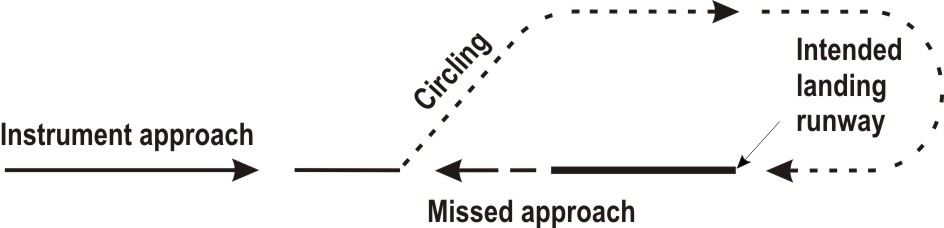
- If possible call Amsterdam ACC Supervisor on telephone number +31 (0)20 406 3999.
Note: use telephone connection to mitigate COM failure only. All telephone calls will be automatically recorded.
- If telephone connection is disconnected prematurely (before read-back), revert to general communication failure procedure.
For the general procedures for IFR flights see ENR 1.3 paragraph "Communication Failure". Additionally, for arriving flights, the following communication failure procedures apply.
Note: use telephone connection to mitigate COM failure only. All telephone calls will be automatically recorded.
- If telephone connection is disconnected prematurely (before read-back), revert to general communication failure procedure.
- Proceed according to the current flight plan route and STAR, to the appropriate holding fix: MASOS or DOFMU, if capable of RNAV 1. Non-RNAV 1 traffic proceed to RTM.
- Maintain the last cleared and acknowledged flight level or altitude.
- Flights via INKET or PAM with last cleared and acknowledged flight level or altitude below FL 050 shall avoid the segment KAKKO – DOFMU and proceed direct to DOFMU.
- After arrival over the holding fix intercept the holding pattern.
- For MASOS commence descent to FL 050 at or as near as possible to the ETO over the holding fix.
- For DOFMU, KAKKO or RTM commence descent to 3000 FT AMSL at or as near as possible to the ETO over the holding fix.
- After reaching FL 050 or 3000 FT AMSL leave the holding fix and carry out an instrument approach procedure to the runway in use (see 2.5.4). Flights via RTM can only use the VOR approach.
- Maintain the last cleared and acknowledged flight level or altitude.
- Flights via INKET or PAM with last cleared and acknowledged flight level or altitude below FL 050 shall avoid the segment KAKKO – DOFMU and proceed direct to DOFMU.
- After arrival over the holding fix intercept the holding pattern.
- For MASOS commence descent to FL 050 at or as near as possible to the ETO over the holding fix.
- For DOFMU, KAKKO or RTM commence descent to 3000 FT AMSL at or as near as possible to the ETO over the holding fix.
- After reaching FL 050 or 3000 FT AMSL leave the holding fix and carry out an instrument approach procedure to the runway in use (see 2.5.4). Flights via RTM can only use the VOR approach.
- Proceed direct to the appropriate holding fix:
1. MASOS or DOFMU, if capable RNAV 1;
2. RTM, only if not capable RNAV 1 or if previously instructed by ATC;
3. KAKKO, only if previously instructed by ATC.
- Maintain the last cleared and acknowledged flight level or altitude.
- After arrival over the holding fix intercept the holding pattern.
- For MASOS commence descent to FL 050 at or as near as possible to the ETO over the holding fix.
- For DOFMU, KAKKO or RTM commence descent to 3000 FT AMSL at or as near as possible to the ETO over the holding fix.
- After reaching FL 050 or 3000 FT AMSL leave the holding fix and carry out an instrument approach procedure to the received and acknowledged runway (see 2.5.4). Flights via RTM can only use the VOR approach.
1. MASOS or DOFMU, if capable RNAV 1;
2. RTM, only if not capable RNAV 1 or if previously instructed by ATC;
3. KAKKO, only if previously instructed by ATC.
- Maintain the last cleared and acknowledged flight level or altitude.
- After arrival over the holding fix intercept the holding pattern.
- For MASOS commence descent to FL 050 at or as near as possible to the ETO over the holding fix.
- For DOFMU, KAKKO or RTM commence descent to 3000 FT AMSL at or as near as possible to the ETO over the holding fix.
- After reaching FL 050 or 3000 FT AMSL leave the holding fix and carry out an instrument approach procedure to the received and acknowledged runway (see 2.5.4). Flights via RTM can only use the VOR approach.
- After leaving the IAF carry out an instrument approach procedure to the received and acknowledged runway or the runway-in-use as is included in the ATIS broadcast (see relevant instrument approach chart).
- Do not use the ILS Y approach RWY 24 unless instructed by ATC.
- Do not use the VOR approach unless instructed by ATC or when unable RNAV 1.
- In case the COM failure occurs after a direct was received to a WPT beyond the IAF, pick up the expected approach procedure from there.
- For approach RWY 24 pass KAKKO at 3000 FT AMSL.
- Do not use the ILS Y approach RWY 24 unless instructed by ATC.
- Do not use the VOR approach unless instructed by ATC or when unable RNAV 1.
- In case the COM failure occurs after a direct was received to a WPT beyond the IAF, pick up the expected approach procedure from there.
- For approach RWY 24 pass KAKKO at 3000 FT AMSL.
The missed approach in case of communication failure is equal to the standard missed approach procedure as described on the relevant instrument approach chart.
Turn to the intended landing runway, intercept the runway track MAG of that runway while:
a. When visual:
- remain visual and execute a circuit for that runway; or,
b. When unable to remain visual:
- climb to 2000 FT AMSL,
- execute the missed approach procedure as depicted on the relevant instrument approach chart.
- remain visual and execute a circuit for that runway; or,
b. When unable to remain visual:
- climb to 2000 FT AMSL,
- execute the missed approach procedure as depicted on the relevant instrument approach chart.
|
- Execute the missed approach procedure as depicted on the relevant instrument approach chart of the intended landing runway . |
|
| Note: the indicated situation is applicable for an initial instrument approach to RWY 06. Circling approaches southeast of RWY 06/24 and extended centre line are prohibited. |
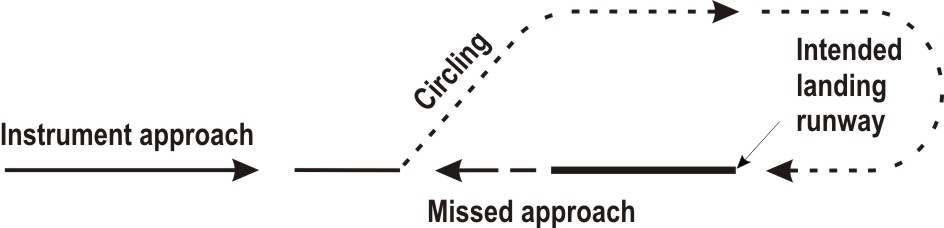
Between the IAF and interception of final approach navigation is primarily based on vectors provided by ATC.
See EHRD AD 2.22 paragraph 2.3.3.
Note:
recommended navaid for selection of MAG station declination only.
Note:
for positions of RD-waypoints see relevant instrument approach charts.
| Serial number |
Path
descriptor |
WPT ident | Fly-over |
Course/Track
°MAG / (°T) |
Recom.
navaid |
Dist. (NM) | Turn | Altitude (FT / FL) |
Speed
(KIAS) |
VPA (°) / TCH (FT) |
NAV
specification |
|---|---|---|---|---|---|---|---|---|---|---|---|
| 001 | IF | MASOS | - | - | - | - | - | - | - | - | - |
| 002 | TF | RD254 | - | 070 / (072.0) | - | 12.0 | - | - | - | - | RNAV 1 |
| 003 | TF | HELHO | - | 087 / (088.7) | - | 11.4 | - | + 2000 | - | - | RNAV 1 |
| 004 | IF | DOFMU | - | - | - | - | - | - | - 220 | - | RNAV 1 |
| 005 | TF | RD201 | - | 333 / (335.2) | - | 4.0 | - | - | - | - | RNAV 1 |
| 006 | TF | HELHO | - | 004 / (006.6) | - | 3.8 | - | + 2000 | - | - | RNAV 1 |
| 007 | IF | HELHO | - | - | - | - | - | + 2000 | - | - | - |
| 008 | CF | RD250 | - | 055 / (056.9) | ROS | 3.6 | - | + 2000 | - | - | - |
| 009 | CF | THR06 | Y | 055 / (057.0) | ROS | 6.2 | - | - | - | -3.00 / 50 | - |
| 010 | TF | RD212 | - | 055 / (057.1) | - | 9.0 | - | @ 2000 | - | - | RNAV 1 |
| 011 | TF | RD213 | - | 145 / (147.3) | - | 5.3 | - | - | - 210 | - | RNAV 1 |
| 012 | TF | KAKKO | - | 235 / (237.3) | - | 6.9 | - | - | - | - | RNAV 1 |
| 013 | TF | DOFMU | - | 229 / (231.1) | - | 14.9 | - | @ 2000 | - | - | RNAV 1 |
| Serial number |
Path
descriptor |
WPT ident | Fly-over |
Course/Track
°MAG / (°T) |
Recom.
navaid |
Dist. (NM) | Turn | Altitude (FT / FL) |
Speed
(KIAS) |
VPA (°) / TCH (FT) |
NAV
specification |
|---|---|---|---|---|---|---|---|---|---|---|---|
| 001 | IF | MASOS | - | - | - | - | - | - | - | - | - |
| 002 | TF | RD254 | - | 070 / (072.0) | - | 12.0 | - | - | - | - | RNAV 1 |
| 003 | TF | HELHO | - | 087 / (088.7) | - | 11.4 | - | + 2000 | - | - | RNAV 1 |
| 004 | IF | DOFMU | - | - | - | - | - | - | - 220 | - | RNAV 1 |
| 005 | TF | RD201 | - | 333 / (335.2) | - | 4.0 | - | - | - | - | RNAV 1 |
| 006 | TF | HELHO | - | 004 / (006.6) | - | 3.8 | - | + 2000 | - | - | RNAV 1 |
| 007 | IF | HELHO | - | - | - | - | - | + 2000 | - | - | - |
| 008 | TF | RD250 | - | 055 / (056.9) | - | 3.6 | - | + 2000 | - | - | RNP APCH |
| 009 | TF | THR06 | Y | 055 / (057.0) | - | 6.2 | - | - | - | -3.00 / 50 | RNP APCH |
| 010 | TF | RD212 | - | 055 / (057.1) | - | 9.0 | - | @ 2000 | - | - | RNP APCH |
| 011 | TF | RD213 | - | 145 / (147.3) | - | 5.3 | - | - | - 210 | - | RNP APCH |
| 012 | TF | KAKKO | - | 235 / (237.3) | - | 6.9 | - | - | - | - | RNP APCH |
| 013 | TF | DOFMU | - | 229 / (231.1) | - | 14.9 | - | @ 2000 | - | - | RNP APCH |
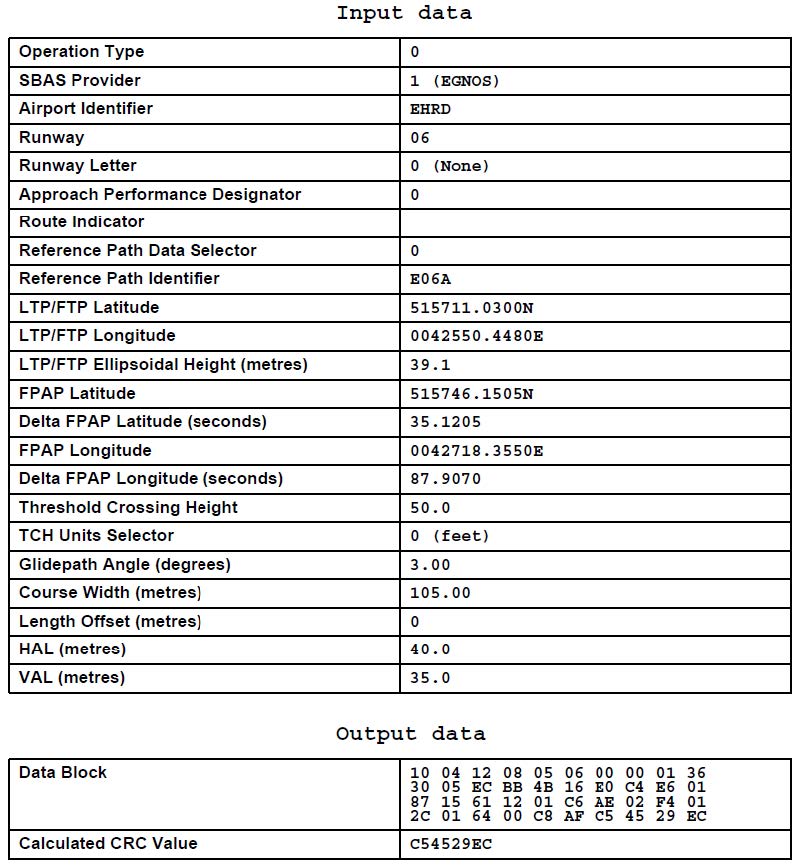
| Serial number |
Path
descriptor |
WPT ident | Fly-over |
Course/Track
°MAG / (°T) |
Recom.
navaid |
Dist. (NM) | Turn | Altitude (FT / FL) |
Speed
(KIAS) |
VPA (°) / TCH (FT) |
NAV
specification |
|---|---|---|---|---|---|---|---|---|---|---|---|
| 001 | IF | DOFMU | - | - | - | - | - | - | - | - | RNAV 1 |
| 002 | TF | KAKKO | - | 049 / (050.8) | - | 14.9 | - | @ 3000 | - | - | RNAV 1 |
| 003 | TF | ROVOX | - | 049 / (051.1) | - | 5.9 | - | B 3000
2500 |
- 190 | - | RNAV 1 |
| 004 | TF | RD241 | - | 323 / (325.3) | - | 4.7 | - | + 1500 | - | - | RNAV 1 |
| 005 | CF | RD242 | - | 235 / (237.1) | RSV | 2.2 | - | + 1500 | - | - | RNAV 1 |
| 006 | CF | THR 24 | - | 235 / (237.2) | RSV | 4.6 | - | - | - | -3.00 / 50 | - |
| 007 | TF | RD214 | - | 235 / (237.1) | - | 13.7 | - | @ 2000 | - | - | RNAV 1 |
| 008 | TF | DOFMU | - | 145 / (146.9) | - | 6.9 | - | @ 2000 | - | - | RNAV 1 |
| Serial number |
Path
descriptor |
WPT ident | Fly-over |
Course/Track
°MAG / (°T) |
Recom.
navaid |
Dist. (NM) | Turn | Altitude (FT / FL) |
Speed
(KIAS) |
VPA (°) / TCH (FT) |
NAV
specification |
|---|---|---|---|---|---|---|---|---|---|---|---|
| 001 | IF | MASOS | - | - | - | - | - | - | - | - | - |
| 002 | TF | KAKKO | - | 078 / (080.2) | - | 36.1 | - | B 3000
2000 |
- | - | RNAV 1 |
| 003 | TF | REWIK | - | 049 / (051.1) | - | 10.2 | - | @ 2000 | - 190 | - | RNAV 1 |
| 004 | TF | RD203 | - | 353 / (355.7) | - | 2.7 | - | - | - | - | RNAV 1 |
| 005 | TF | ATWIT | - | 263 / (265.7) | - | 3.8 | - | - | - | - | RNAV 1 |
| 006 | IF | DOFMU | - | - | - | - | - | - | - | - | RNAV 1 |
| 007 | TF | KAKKO | - | 049 / (050.8) | - | 14.9 | - | B 3000
2000 |
- | - | RNAV 1 |
| 008 | TF | REWIK | - | 049 / (051.1) | - | 10.2 | - | @ 2000 | - 190 | - | RNAV 1 |
| 009 | TF | RD203 | - | 353 / (355.7) | - | 2.7 | - | - | - | - | RNAV 1 |
| 010 | TF | ATWIT | - | 263 / (265.7) | - | 3.8 | - | - | - | - | RNAV 1 |
| 011 | IF | ATWIT | - | - | - | - | - | - | - | - | - |
| 012 | CF | RD252 | - | 235 / (237.3) | RSV | 3.0 | - | + 2000 | - | - | - |
| 013 | CF | RD255 | - | 235 / (237.2) | RSV | 2.2 | - | + 1310 | - 160 | - | - |
| 014 | CF | THR 24 | - | 235 / (237.2) | RSV | 4.0 | - | - | - | -3.00 / 50 | - |
| 015 | TF | RD214 | - | 235 / (237.1) | - | 13.7 | - | @ 2000 | - | - | RNAV 1 |
| 016 | TF | DOFMU | - | 145 / (146.9) | - | 6.9 | - | @ 2000 | - | - | RNAV 1 |
| Serial number |
Path
descriptor |
WPT ident | Fly-over |
Course/Track
°MAG / (°T) |
Recom.
navaid |
Dist. (NM) | Turn | Altitude (FT / FL) |
Speed
(KIAS) |
VPA (°) / TCH (FT) |
NAV
specification |
|---|---|---|---|---|---|---|---|---|---|---|---|
| 001 | IF | MASOS | - | - | - | - | - | - | - | - | - |
| 002 | TF | KAKKO | - | 078 / (080.2) | - | 36.1 | - | B 3000
2000 |
- | - | RNAV 1 |
| 003 | TF | REWIK | - | 049 / (051.1) | - | 10.2 | - | @ 2000 | - 190 | - | RNAV 1 |
| 004 | TF | RD203 | - | 353 / (355.7) | - | 2.7 | - | - | - | - | RNAV 1 |
| 005 | TF | ATWIT | - | 263 / (265.7) | - | 3.8 | - | - | - | - | RNAV 1 |
| 006 | IF | DOFMU | - | - | - | - | - | - | - | - | RNAV 1 |
| 007 | TF | KAKKO | - | 049 / (050.8) | - | 14.9 | - | B 3000
2000 |
- | - | RNAV 1 |
| 008 | TF | REWIK | - | 049 / (051.1) | - | 10.2 | - | @ 2000 | - 190 | - | RNAV 1 |
| 009 | TF | RD203 | - | 353 / (355.7) | - | 2.7 | - | - | - | - | RNAV 1 |
| 010 | TF | ATWIT | - | 263 / (265.7) | - | 3.8 | - | - | - | - | RNAV 1 |
| 011 | IF | ATWIT | - | - | - | - | - | - | - | - | - |
| 012 | TF | RD252 | - | 235 / (237.3) | - | 3.0 | - | + 2000 | - | - | RNP APCH |
| 013 | TF | THR24 | Y | 235 / (237.2) | - | 6.2 | - | - | - | -3.00 / 50 | RNP APCH |
| 014 | TF | RD214 | - | 235 / (237.1) | - | 13.7 | - | @ 2000 | - | - | RNP APCH |
| 015 | TF | DOFMU | - | 145 / (146.9) | - | 6.9 | - | @ 2000 | - | - | RNP APCH |
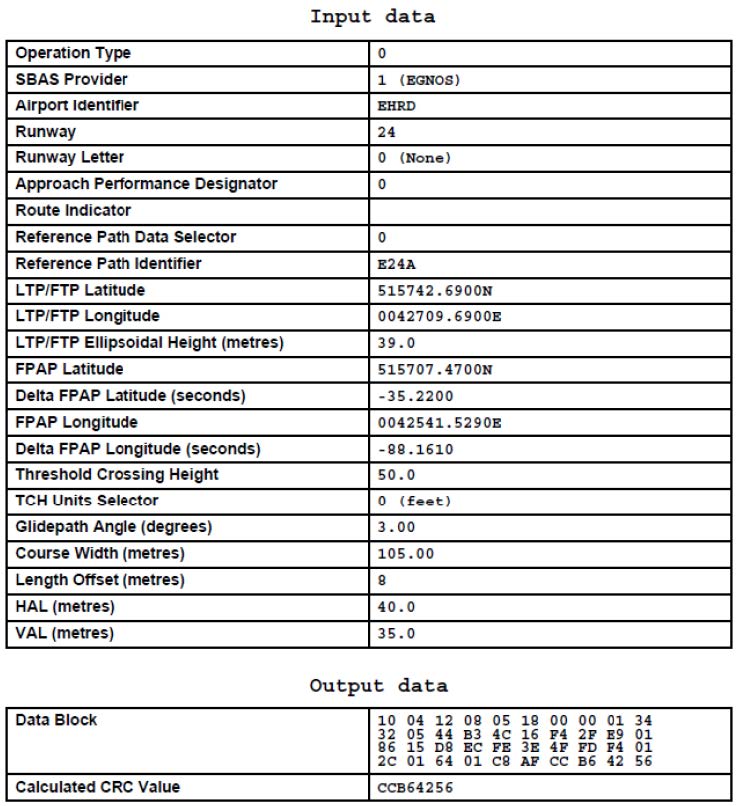
During periods of low visibility the overall ATC capacity is reduced. To guarantee aircraft safety and optimal use of ATC capacity, Rotterdam Airport uses ATC low visibility procedures. When the visibility falls below 1500 M and the ceiling becomes equal to or below 300 FT, cautionary measures are taken. Four low visibility phases are recognised:
| Phase | Conditions | Procedure |
| A | Lowest RVR <= 1500 M
and/or ceiling <= 300 FT |
No conditional clearances. Limited use of intersection take-offs. |
| B | Lowest RVR < 550 M
and/or ceiling < 200 FT |
RWY 06/24 will only be used in one direction. Taxiing only allowed under the guidance of a marshaller or with a follow-me car. If no marshaller/car is available ATC may give permission to taxi if no other aircraft is moving or expected to be moving in the manoeuvring area. |
| C | Lowest RVR < 350 M | RWY 06/24 will only be used in one direction. Taxiing only allowed under the guidance of a marshaller or with a follow-me car. If no marshaller/car is available ATC may give permission to taxi if no aircraft is moving or expected to be moving in the manoeuvring area. |
| D | Highest RVR < 100 M | The airport is below operational limits for arriving and departing aircraft. |
Note
: see also VAC (VFR) charts.
1. All VFR flights within the Rotterdam CTR shall submit a flight plan (see ENR 1.10).
2. Prior permission is required from Rotterdam TWR for all VFR operations in the CTR.
3.The use of RWY 06/24 is restricted to aircraft maintaining two-way radio contact with TWR.
4. Pilots shall adhere to the approach or departure route as indicated on the charts, unless otherwise instructed by ATC.
5. Pilots shall strictly adhere to the circuits as indicated on the charts, unless otherwise instructed by ATC.
6. Noise abatement has been included in the procedures.
7. Built-up areas shall be avoided as much as possible.
8. Marked areas shall be avoided.
9. Standard circuit altitude is 1000 FT AMSL for inbound VFR traffic. Standard altitude for VFR training circuit is 500 FT AMSL.
10. IFR areas: VFR flights within the CTR may be instructed by ATC to stay clear of the specified IFR areas. These areas are indicated on the chart.
11. VFR reporting points positions:
2. Prior permission is required from Rotterdam TWR for all VFR operations in the CTR.
3.The use of RWY 06/24 is restricted to aircraft maintaining two-way radio contact with TWR.
4. Pilots shall adhere to the approach or departure route as indicated on the charts, unless otherwise instructed by ATC.
5. Pilots shall strictly adhere to the circuits as indicated on the charts, unless otherwise instructed by ATC.
6. Noise abatement has been included in the procedures.
7. Built-up areas shall be avoided as much as possible.
8. Marked areas shall be avoided.
9. Standard circuit altitude is 1000 FT AMSL for inbound VFR traffic. Standard altitude for VFR training circuit is 500 FT AMSL.
10. IFR areas: VFR flights within the CTR may be instructed by ATC to stay clear of the specified IFR areas. These areas are indicated on the chart.
11. VFR reporting points positions:
Pilots must have obtained start-up clearance from ATC before starting engines. A request for start-up shall be made to Rotterdam Delivery; clearance for start-up will either be issued immediately or at a specified time depending on traffic. A request for start-up includes:
- aircraft identification (e.g. PHSPY).
- position (e.g. opposite tower).
- ATIS information (e.g. information J).
- flight rules (e.g. VFR).
- destination (e.g. Hilversum).
- request start-up.
1.
MIKE Departure
: after take-off follow the VFR route via OSCAR (or ABM OSCAR) to MIKE while climbing to 1000 FT AMSL and keep 500 M to the right-hand side of the railway.
2. ROMEO Departure : after take-off follow the VFR route via OSCAR (or ABM OSCAR) and FOXTROT to ROMEO while climbing to 1500 FT AMSL and keep 500 M to the right-hand side of the highway.
3. HOTEL Departure (ATC discretion only): after take-off follow the VFR route via TANGO, SIERRA to WHISKEY in the direction HOTEL while climbing to 1000 FT AMSL. (This VFR route coincides with RTM VOR radial 271).
4. For other directions. Departure instructions will be given.
- position (e.g. opposite tower).
- ATIS information (e.g. information J).
- flight rules (e.g. VFR).
- destination (e.g. Hilversum).
- request start-up.
2. ROMEO Departure : after take-off follow the VFR route via OSCAR (or ABM OSCAR) and FOXTROT to ROMEO while climbing to 1500 FT AMSL and keep 500 M to the right-hand side of the highway.
3. HOTEL Departure (ATC discretion only): after take-off follow the VFR route via TANGO, SIERRA to WHISKEY in the direction HOTEL while climbing to 1000 FT AMSL. (This VFR route coincides with RTM VOR radial 271).
4. For other directions. Departure instructions will be given.
1. Contact Rotterdam TWR 2 minutes before reaching the CTR boundary for permission to enter the CTR.
2. MIKE Arrival: enter the CTR via MIKE at 1000 FT AMSL; follow the VFR route via OSCAR (or ABM OSCAR) to PAPA and keep 500 M to the right-hand side of the railway.
3. ROMEO Arrival : enter the CTR via ROMEO at 1500 FT AMSL; follow the VFR route via OSCAR (or ABM OSCAR) to PAPA and keep 500 M to the right-hand side of the highway.
4. HOTEL Arrival (ATC discretion only): enter the CTR via WHISKEY at 1500 FT AMSL; follow the VFR route via SIERRA to TANGO. (This VFR route coincides with RTM VOR radial 271).
5. Pilots may be instructed to hold over ROMEO, FOXTROT, ABM MIKE, ABM OSCAR, WHISKEY, SIERRA or TANGO.
6. When instructed to approach via ABM PAPA the following applies for RWY 06/24:
a. Join the circuit as instructed by ATC.
b. Maintain 1000 FT AMSL (MIKE Arrival) or 1500 FT AMSL (ROMEO Arrival).
c. After passing ABM PAPA cross the runway in the middle and join the downwind leg as instructed by ATC.
7. In case of an overshoot enter the relevant traffic circuit and inform ATC.
2. MIKE Arrival: enter the CTR via MIKE at 1000 FT AMSL; follow the VFR route via OSCAR (or ABM OSCAR) to PAPA and keep 500 M to the right-hand side of the railway.
3. ROMEO Arrival : enter the CTR via ROMEO at 1500 FT AMSL; follow the VFR route via OSCAR (or ABM OSCAR) to PAPA and keep 500 M to the right-hand side of the highway.
4. HOTEL Arrival (ATC discretion only): enter the CTR via WHISKEY at 1500 FT AMSL; follow the VFR route via SIERRA to TANGO. (This VFR route coincides with RTM VOR radial 271).
5. Pilots may be instructed to hold over ROMEO, FOXTROT, ABM MIKE, ABM OSCAR, WHISKEY, SIERRA or TANGO.
6. When instructed to approach via ABM PAPA the following applies for RWY 06/24:
a. Join the circuit as instructed by ATC.
b. Maintain 1000 FT AMSL (MIKE Arrival) or 1500 FT AMSL (ROMEO Arrival).
c. After passing ABM PAPA cross the runway in the middle and join the downwind leg as instructed by ATC.
7. In case of an overshoot enter the relevant traffic circuit and inform ATC.
RWY 06: a lefthand circuit at 1000 FT AMSL.
RWY 24: a righthand circuit at 1000 FT AMSL, maintain 1000 FT AMSL until turning base leg.
Note:
for traffic reasons pilots may be instructed to extend the downwind leg.
RWY 24: a righthand circuit at 1000 FT AMSL, maintain 1000 FT AMSL until turning base leg.
To avoid noise in the villages north of RWY 24, a VFR training circuit has been established at 500 FT AMSL within a designated area. For these flights the threshold RWY 24 has been displaced 800 metres beyond the normal threshold RWY 24 indicated by white marking and red/white markers on the right side of the runway.
1. Always stay inside the designated circuit area.
2. Lefthand circuit, altitude 500 FT AMSL.
3. After passing the red/white markers along the runway turn to crosswind leg.
4. Downwind leg is marked by the orange coloured VHF COM station.
5. Turn base leg after passing the Delftsche Schie.
6. Touchdown at threshold RWY 06.
2. Lefthand circuit, altitude 500 FT AMSL.
3. After passing the red/white markers along the runway turn to crosswind leg.
4. Downwind leg is marked by the orange coloured VHF COM station.
5. Turn base leg after passing the Delftsche Schie.
6. Touchdown at threshold RWY 06.
1. Always stay inside the designated circuit area.
2. Righthand circuit, altitude 500 FT AMSL.
3. Turn crosswind leg after passing the Delftsche Schie.
4. Downwind leg is marked by the orange coloured VHF COM station.
5. Turn base leg abeam the normal threshold RWY 24.
6. Touchdown at displaced threshold.
Note:
for traffic reasons pilots may be instructed to hold in area ALPHA or BRAVO within the designated circuit area. Both areas are separated by the area between highway A13 and the Delftsche Schie.
2. Righthand circuit, altitude 500 FT AMSL.
3. Turn crosswind leg after passing the Delftsche Schie.
4. Downwind leg is marked by the orange coloured VHF COM station.
5. Turn base leg abeam the normal threshold RWY 24.
6. Touchdown at displaced threshold.
- Select transponder code 7600.
- If possible call Amsterdam ACC Supervisor on telephone number +31 (0)20 406 3999.
Note: use telephone connection to mitigate COM failure only. All telephone calls will be automatically recorded.
- If telephone connection is disconnected prematurely (before read-back), revert to communication failure procedures below.
- If possible call Amsterdam ACC Supervisor on telephone number +31 (0)20 406 3999.
Note: use telephone connection to mitigate COM failure only. All telephone calls will be automatically recorded.
- If telephone connection is disconnected prematurely (before read-back), revert to communication failure procedures below.
In case of communication failure adhere to the departure instructions. If the departure instructions contain a clearance limit in the CTR, act in accordance with paragraph 4.5.4.
a. In case of communication failure before joining the circuit leave the CTR according to the ROMEO or MIKE Departure and divert to an appropriate aerodrome.
b. In case of communication failure over or after a position from where to join the circuit (this is past the reporting point PAPA) execute a circuit for the last received and acknowledged runway as short as practicable. Make a full stop landing and vacate as soon as possible.
In case of go-around execute a similar circuit (be aware of the fact that your flight path could interfere with the flight path of other aerodrome traffic).
b. In case of communication failure over or after a position from where to join the circuit (this is past the reporting point PAPA) execute a circuit for the last received and acknowledged runway as short as practicable. Make a full stop landing and vacate as soon as possible.
In case of go-around execute a similar circuit (be aware of the fact that your flight path could interfere with the flight path of other aerodrome traffic).
a. In case of communication failure before joining the circuit leave the CTR according to the HOTEL Departure and divert to an appropriate aerodrome.
b. In case of communication failure over or after a position from where to join the circuit (this is past compulsory reporting point TANGO) act in accordance with paragraph 4.5.3.1 item b.
b. In case of communication failure over or after a position from where to join the circuit (this is past compulsory reporting point TANGO) act in accordance with paragraph 4.5.3.1 item b.
a. In case of communication failure before joining the circuit act in accordance with paragraph 4.5.4.
b. In case of communication failure over or after a position from where to join the circuit act in accordance with paragraph 4.5.3.1 item b.
b. In case of communication failure over or after a position from where to join the circuit act in accordance with paragraph 4.5.3.1 item b.
In case of communication failure leave the CTR via the shortest route, maintain altitude until outside the CTR, do not cross runway centre line or IFR areas and proceed to an appropriate aerodrome.
1. Pilots are urgently advised to maintain two-way radio communication within the Rotterdam TMAs. When operating in Rotterdam TMA 1 and 2 or in the vicinity of Schiphol TMA 1 and below Rotterdam TMA 1 and 2, the use of a frequency monitoring code as outlined in ENR 1.2 is strongly recommended.
2. For details of the low flying areas and routes see ENR 5.2.
3. VFR flights shall not be operated in the Schiphol TMAs, unless authorised by the appropriate ATS authority (see ENR 1.2).
4. Pilots are urgently requested not to execute VFR flights in the vicinity of the published instrument arrival and departure routes within the Rotterdam TMA, see EHRD AD 2.24.
5. Caution during approach to RWY 06 with south-eastern (light, moderate or strong) wind, pilots should be aware and must be prepared for the possibility of building-induced turbulence, wind shear and wind gradient effects over the THR and TDZ of RWY 06. During these circumstances, while landing at RWY 06, pilots should be aware of suddenly increased turbulence.
6. Pilots shall be aware that in the vicinity of the aerodrome ATC gives priority to:
- aircraft in state of an emergency;
- hospital and police aircraft with the status priority or scramble;
- aircraft engaged in SAR operations.
7. Bird-scare activities 24 hours a day available/active with the use of various equipment/means including flare shellcrackers, bird dispersal guns and amplified cries of distress.
8. When lightning discharges are observed in the vicinity of the airport, the Duty Manager Operations (DMO) will announce that all ground handling and re-fuelling operations are prohibited until further notice. When it is safe to do so, the DMO will declare that ground handling and re-fuelling operations can be resumed. Handling stop will be indicated by special light/sound signals or by ATC.
2. For details of the low flying areas and routes see ENR 5.2.
3. VFR flights shall not be operated in the Schiphol TMAs, unless authorised by the appropriate ATS authority (see ENR 1.2).
4. Pilots are urgently requested not to execute VFR flights in the vicinity of the published instrument arrival and departure routes within the Rotterdam TMA, see EHRD AD 2.24.
5. Caution during approach to RWY 06 with south-eastern (light, moderate or strong) wind, pilots should be aware and must be prepared for the possibility of building-induced turbulence, wind shear and wind gradient effects over the THR and TDZ of RWY 06. During these circumstances, while landing at RWY 06, pilots should be aware of suddenly increased turbulence.
6. Pilots shall be aware that in the vicinity of the aerodrome ATC gives priority to:
- aircraft in state of an emergency;
- hospital and police aircraft with the status priority or scramble;
- aircraft engaged in SAR operations.
7. Bird-scare activities 24 hours a day available/active with the use of various equipment/means including flare shellcrackers, bird dispersal guns and amplified cries of distress.
8. When lightning discharges are observed in the vicinity of the airport, the Duty Manager Operations (DMO) will announce that all ground handling and re-fuelling operations are prohibited until further notice. When it is safe to do so, the DMO will declare that ground handling and re-fuelling operations can be resumed. Handling stop will be indicated by special light/sound signals or by ATC.
The datum line from which the reduced runway declared distances for take-off should be determined is defined by the intersection of the downwind edge of the specific taxiway with the runway edge as shown in the diagram below. The loss of runway length due to alignment of the aircraft prior to take-off should be taken into account by the operators for the calculation of the aircraft's take-off mass (ICAO Annex 6, Part 1, paragraph 5.2.8).
If an intersection take-off will take place from a taxiway with an intersection angle of 55°, and the taxiway centre line is followed until the runway centre line, there is a loss of line-up distance of APRX 100 M.
If an intersection take-off will take place from a taxiway with an intersection angle of 55°, and the taxiway centre line is followed until the runway centre line, there is a loss of line-up distance of APRX 100 M.
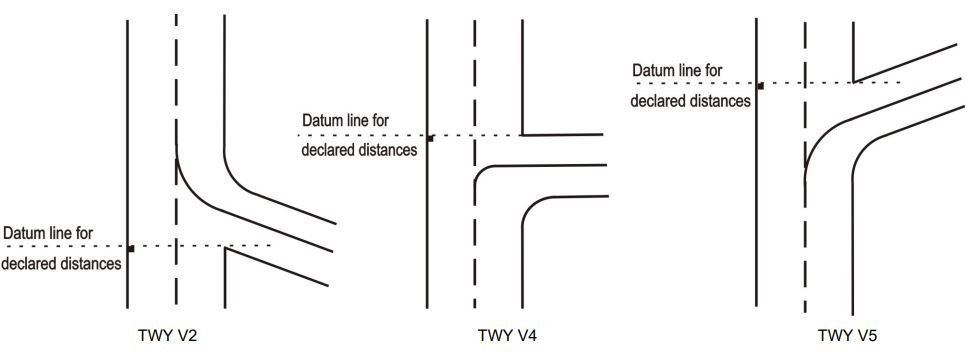
Pilots shall declare a medical emergency to ATC only in case of a patient on board suffering from a life-threatening condition. A patient's medical condition is categorised and should be handled as follows:
- Medical emergency (life-threatening): pilots shall contact ATC to declare a medical emergency by radio call prefixed by PAN PAN (3X) for urgency. Priority handling will be provided. Medical crew will board the aircraft before passengers disembark.
- Medical care at the stand (non-life-threatening): flight crew shall contact ground handler only to arrange medical crew at the stand.
- Medical care at the stand (non-life-threatening): flight crew shall contact ground handler only to arrange medical crew at the stand.
| 1. Commercial passengers and cargo | |
| Post: | Aviapartner B.V.
P.O. Box 12036 3004 GA Rotterdam |
| TEL: | +31 (0)10 238 2704 |
| FAX: | +31 (0)10 238 2707 |
| Email: | [email protected] |
| SITA: | RTMAOXH |
| Note: | Aviapartner Rotterdam 131.755 |
| 2. Ground handling (business and general aviation) | |
| Post: | Jet Aviation Netherlands
Fornebubaan 19 3045 AV Rotterdam |
| TEL: | +31 (0)10 298 4949 |
| FAX: | +31 (0)10 298 4948 |
| Email: | [email protected] |
| URL: | https://www.jetaviation.com |
| Note: | Jet Aviation Rotterdam 131.980 |
| 3. Ground handling (recreational general aviation only) | |
| Post: | Vliegclub Rotterdam (Flying Club Rotterdam)
Zaventembaan 1 3045 AR Rotterdam |
| TEL: | +31 (0)10 415 3353 |
| FAX: | +31 (0)10 415 8063 |
| Email: | [email protected] |
| URL: | https://www.vliegclubrotterdam.nl |
| Note: | request handling Vliegclub Rotterdam via website 24 HR before ETA. |
|
Charts
|
Pages
|
|---|---|
|
ADC
|

|
|
APDC
|
|
|
GMC taxi routes RWY 06
|
|
|
GMC taxi routes RWY 24
|
|
|
AOC type A RWY 06-24
|
|
|
SID
|
|
|
SID RWY 06 east
|
|
|
SID RWY 06 west
|
|
|
SID RWY 24 east
|
|
|
SID RWY 24 west
|
|
|
STAR
|
|
|
ATCSMAC
|
|
|
IAC ILS or LOC RWY 06
|
|
|
IAC VOR RWY 06
|
|
|
IAC RNP RWY 06
|
|
|
IAC ILS Z or LOC Z RWY 24
|
|
|
IAC ILS Y or LOC Y RWY 24
|
|
|
IAC VOR RWY 24
|
|
|
IAC RNP RWY 24
|
|
|
VAC - VFR procedures
|
|
|
VFR TFC circuits radio equipped light ACFT
|
|
|
VFR TRG circuits
|
|
NIL